
Advancements In Transformer Architectures For Large Language Model: From Bert To Gpt-3 And Beyond
ABSTRACT
The emergence of transformer architectures has revolutionized the field of natural language processing. These architectures have paved the way for developing highly sophisticated models, such as BERT and GPT-3, which have demonstrated remarkable performance across various language tasks. These models have been trained on massive amounts of textual data, enabling them to generate text that resembles human language, accurately answer complex questions, and accomplish other language-related tasks with unparalleled precision. The impact of these advancements is significant, as they have opened the door to new possibilities in the realm of natural language processing. This study has articulated different type of LLMs, their uses, issues and future directions.
Keywords: Large Language Model, Machine Learning, Artificial Intelligence.
INTRODUCTION
In recent years, natural language processing has made significant progress, primarily due to the advancement and utilization of transformer architectures. These architectures, including BERT and GPT-3, have transformed language understanding and generation, enabling models to perform complex language tasks with exceptional accuracy (Bahrini et al., 2023). The transformer architectures have learned intricate patterns and semantics of language by being trained on massive datasets. Researchers have incorporated various techniques and optimizations in developing transformer architectures, such as decision trees, gradient boosting machines, random forests, recurrent neural networks, convolutional neural networks, and extended short-term memory networks (Xiao & Zhu, 2023).Transformer architectures have paved the way for exact and efficient models in natural language processing, achieving state-of-the-art results in tasks such as text classification, named entity recognition, sentiment analysis, language translation, and question-answering (Turner, 2023). Despite their success, transformer architectures have certain limitations. Nevertheless, they have revolutionized natural language processing and paved the way for advancements in other domains, such as computer vision and speech recognition (Kasneci et al., 2023). Their ability to capture long-range dependencies and understand complex relationships within data has made them pivotal in various machine-learning applications (Bender et al., 2021). Furthermore, transformer architectures have evolved significantly to become more efficient and scalable models. Recent research has focused on enhancing their computational efficiency and developing lightweight transformer models that deliver high-performance results while consuming fewer computational resources (Strubell et al., 2020). Additionally, incorporating attention mechanisms and self-supervised learning techniques has further improved the capabilities of transformer architectures, enabling them to learn from unlabeled data and perform well in low-resource settings. As the demand for more advanced language understanding and generation models continues to grow, the field of transformer architecture is expected to witness further innovations and breakthroughs, ultimately driving the next wave of progress in natural language processing and beyond.
LITERATURE REVIEW
The scholarly literature on transformer architectures in natural language processing presents a comprehensive overview of the significant advancements that have been achieved in recent years. Multiple studies have demonstrated the effectiveness of transformer models such as BERT and GPT-3 in enhancing the performance of various tasks, including text classification, named entity recognition, sentiment analysis, language translation, and question-answering (Xiao & Zhu, 2023). For example, BERT introduced a novel pretraining approach via masked language modeling, which enables the model to predict missing words from a sentence. This approach helps the model comprehend the contextual relationships between words, enhancing its language representation capabilities(Gillioz et al., 2020). Similarly, GPT-3 introduced a massive scale of pretraining by training on vast amounts of text data, enabling it to generate coherent and contextually accurate text responses(Kasneci et al., 2023). Despite the significant improvements transformer architectures have brought to the field, they have limitations.
Transformer Models in Modern NLP Tasks:
Transformers have revolutionized the field of natural language processing, paving the way for better language comprehension and generation. Models like BERT and GPT-3 have set new benchmarks for tasks such as text classification, named entity recognition, sentiment analysis, language translation, and question- answering(Islam et al., 2023). What sets transformers apart is their ability to understand complex relationships and capture long-range dependencies within language data. This enables them to generate human-like text with exceptional accuracy and precision(Turner, 2023). One of the critical features of transformers is their self- attention mechanism, which helps them weigh the importance of different words in a sentence. This allows them to capture contextual nuances and semantic meanings effectively(Rogers et al., 2020). Moreover, transformers excel at pre-training, leveraging vast amounts of text data to develop a deep understanding of language semantics and syntax. This pretraining is crucial in improving the language representation capabilities of the models, which is essential for their performance across a wide range of language-related tasks(Gillioz et al., 2020). Recent advancements in transformer architectures have made them more computationally efficient and resource-friendly. This has led to developing lightweight transformer models that deliver high performance without heavy computational requirements. Additionally, incorporating attention mechanisms and self-supervised learning techniques has empowered transformers to excel in low-resource settings and learn from unlabeled data effectively. The evolution of transformer architectures in NLP is expected to continue, driving further innovations and breakthroughs(Gillioz et al., 2020). The increasing demand for advanced language understanding and generation models will likely fuel the development of more sophisticated transformer models, pushing the boundaries of natural language processing and expanding their applications beyond traditional language tasks. Figure 1 shows the transformer Architecture of BERT and GPT.
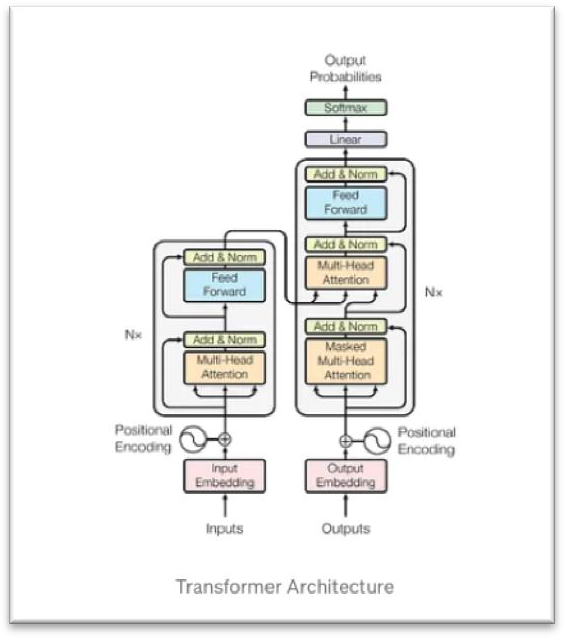
Figure 1: Transformer Architecture
BERT architecture and key features:
Bidirectional Encoder Representations from Transformers is a transformer-based model that has made remarkable strides in natural language understanding. It was created by Devlin et al. in 2018 and has set new standards for various NLP tasks, including question-answering, named entity recognition, and classification. BERT uses a multilayered bidirectional transformer encoder that employs a self-attention mechanism. This feature enables BERT to prioritize the significance of different words in a sentence, concentrating on the most relevant information while disregarding irrelevant words and noise(Niu et al., 2024). BERT's architecture consists of two primary stages: pretraining and fine-tuning. During pretraining, BERT is fed large volumes of text data such as the Books Corpus database and the English Wikipedia text passages dataset. During this pretraining process, BERT is trained to predict masked tokens in a sentence and predict the next sentence in a pair of sentences. This pretraining process enables BERT to develop a deep understanding of language semantics and syntax(Niu et al., 2024). During the fine-tuning phase, BERT is further trained on specific downstream tasks by adjusting its parameters based on labeled data. It can adapt its knowledge and learn task- specific patterns and features by fine-tuning BERT on task-specific data. BERT's bidirectional encoding strategy allows it to consider both left and right context when processing a token, enabling it to capture more detailed and contextualized representations of words and phrases(Gupta et al., 2024). BERT's pretraining on a large corpus of unlabeled text data allows it to learn a broad range of language patterns and structures. Pretraining on an enormous amount of data enables BERT to capture abstract language patterns and relationships that are not specific to any particular task(Niu et al., 2024). This makes BERT an extremely versatile model that can be fine-tuned for various downstream NLP tasks without extensive task-specific training data. BERT offers several key features and innovations that contribute to its exceptional performance in NLP tasks, making it a vital tool for researchers and industries.
GPT-3 architecture and key innovations:
Generative Pre-trained Transformer 3, popularly known as GPT-3, is an autoregressive language model that represents a significant advancement over its predecessor BERT. GPT-3 boasts a massive model size of 175 billion parameters, which is ten times more than any non-sparse language model that has been developed before(Memarian & Doleck, 2023). This enormous scale empowers GPT-3 to deliver remarkable performance on few-shot tasks, where it can perform with competence even with minimal examples or instructions in a new language task. In contrast to BERT, which emphasizes bidirectional encoding and fine-tuning for specific tasks, GPT-3 focuses on generating coherent and contextually appropriate text continuations(Bin-Nashwan et al., 2023). The innovative architecture of GPT-3 has led to its remarkable performance in various domains of natural language processing. GPT-3 has found widespread use in language generation tasks, where it can generate coherent and contextually appropriate text based on a given prompt or input(Javidan et al., 2023). Additionally, GPT-3 excels in question-answering tasks, where it can provide detailed and informative responses to user queries with a high level of accuracy and relevance. Furthermore, GPT-3's ability to complete text has proven highly valuable. It can generate accurate and meaningful completions for partial sentences or paragraphs, making it useful for tasks such as summarizing articles or generating code.
Exploration of potential applications and implications of future transformer models related to GPT:
The field of transformer architecture is continuously advancing, offering various opportunities for further research and development. As transformer architectures progress, it's important to consider their potential applications and their implications for future GPT models. The scalability of transformer architectures provides possibilities for even larger and more powerful models. Models such as GPT-3 have already demonstrated their ability to generate high-quality text and perform well on various natural language processing (NLP) tasks(Javidan et al., 2023). Fine-tuning capabilities allow customizing transformer models for specific domains or tasks. This opens opportunities for creating specialized language models that excel in specific industries or fields, such as legal or medical domains. Furthermore, future transformer models could address some of the limitations and drawbacks of current models(Gillioz et al., 2020). One such limitation is their dependence on large amounts of training data, leading to biases and limitations in the generated output. Future transformer models can aim to address these issues by incorporating methods that reduce bias and enhance fairness in the generated text. Additionally, future transformer models could also focus on improving interpretability and explainability. This is a crucial area of research as the black-box nature of transformer models like GPT-3 makes it challenging to comprehend how and why they generate specific responses.Furthermore, the development of transformer architectures presents exciting possibilities for the future of natural language processing(Wan et al., 2024). These models have vast and varied potential applications, from creating specialized language models for specific industries to reducing biases and enhancing fairness in generated text. Future research should address the limitations and drawbacks of current models while improving interpretability and explainability.
APPLICATIONS AND IMPACT OF LARGE LANGUAGE MODEL
The evolution of transformer architectures, from BERT to GPT-3 and beyond, has profoundly impacted the field of natural language processing, presenting new possibilities for various applications(Niu et al., 2024). These include automated language translation, sentiment analysis, text summarization, chatbots, question-answering systems, and content and code generation. Large language models, such as GPT-3, have transformed these applications, offering more precise and contextually relevant results(Javidan et al., 2023). Additionally, their impact extends beyond enhancing existing applications; they have the potential to revolutionize entire industries, including education, business, and research. In education, for example, GPT-3 and other large language models can reform the traditional faculty-centered approach by providing students with 24/7 access to virtual instructors with globally approved knowledge(Bin-Nashwan et al., 2023). These virtual instructors can deliver personalized and interactive learning experiences, ushering a shift towards a student-centered educational paradigm. By enabling access to vast amounts of information and knowledge, these models can empower educators to create more effective and engaging learning environments that encourage critical thinking and creativity in students(Javidan et al., 2023). In conclusion, the development and progress of transformer architectures have significantly influenced natural language processing, bringing new applications and possibilities to the forefront. Large language models like GPT-3 have transformed various applications, and their potential impact goes beyond improving existing applications to revolutionizing entire industries such as education, business, and research. Figure 2 shows the use of LLM model related to Chat Bot [6].
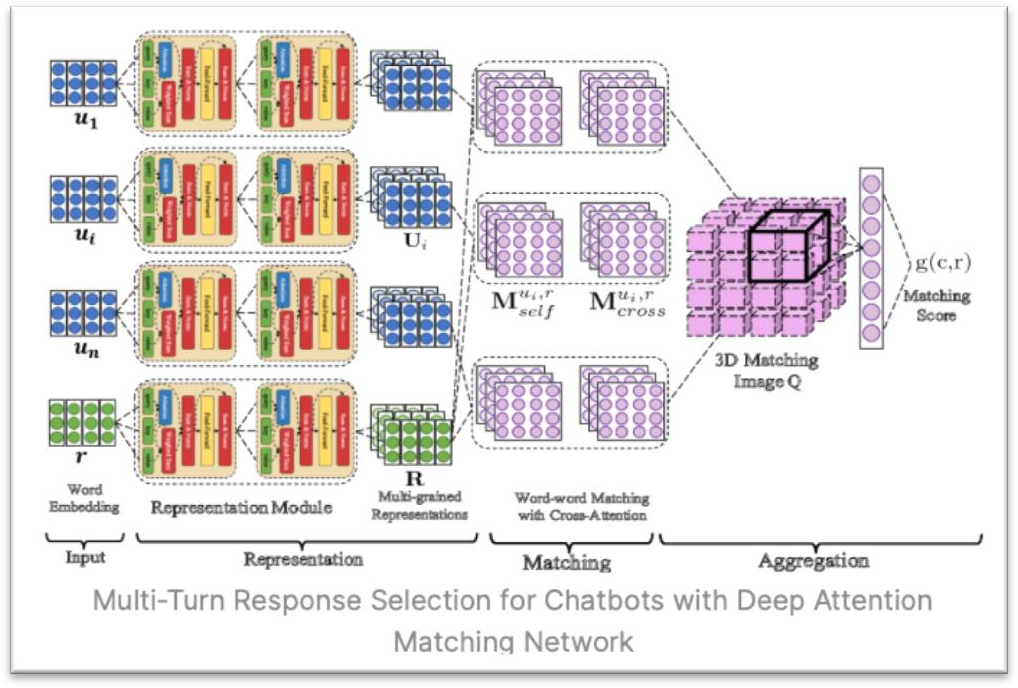
Figure 2: Application of GPT for Chatbots
Exploration of real-world use cases and success stories leveraging transformer models:
The rapid advancements in transformer architectures have demonstrated promising outcomes in various real- world applications. One of the successful use cases of transformer models such as GPT-3 is customer service. Notable companies, including H&M, Airbnb, Capital One, Oracle, and Bank of America, have utilized conversational AI powered by transformer models to enhance customer engagement and provide personalized recommendations and solutions(Zhang et al., 2023). H&M, for instance, has employed conversational AI to assist customers with personalized fashion recommendations and styling advice. Similarly, Bank of America has implemented conversational AI powered by transformer models in the banking industry to automate routine tasks and improve customer satisfaction(Javidan et al., 2023). In addition, transformer models have also exhibited great potential in scientific research and knowledge generation. Researchers have utilized transformer models like BERT and GPT-3 to analyze large volumes of scientific literature and generate novel insights.
Analysis of the implications of transformer advancements on industries such as healthcare, finance, and education:
The recent advancements in transformer architectures hold significant potential for various industries, including healthcare, finance, and education (Meduri et al., 2024). For instance, large language models in healthcare can analyze medical literature and patient data to provide personalized treatment recommendations, ultimately leading to better patient outcomes and more efficient healthcare delivery(Javidan et al., 2023). Similarly, transformer models can assist in sentiment analysis of market data, risk assessment, and fraud detection in finance. In addition, transformer models can revolutionize the education sector by providing virtual instructors with globally validated knowledge, available 24/7 in any language and format(Kasneci et al., 2023). This transformative approach can flip the traditional faculty-centered approach and change faculty members' role into learning facilitators.

Figure 3: LLM use case in Finance
CHALLENGES AND CONSIDERATIONS
Although transformer architectures have made impressive strides and shown promising results, they have certain challenges and limitations. One of the most significant hurdles is the immense computational power required to train and deploy large transformer models(Zhang et al., 2024). This can make training transformer models on vast quantities of data time-consuming and costly, making them less accessible to smaller organizations or those with limited resources. Another issue is the potential for bias in transformer models(TaghiBeyglou & Rudzicz, 2024). Because they rely heavily on large datasets, transformer models can accidentally encode biases present in the training data (Meduri et al., 2024). These biases can result in unfair or discriminatory outputs, impacting concerns such as inclusiveness, equality, and equity(Memarian & Doleck, 2023). Additionally, transformer architectures may not adequately protect the sensitive data that users input into AI tools. As language models become increasingly sophisticated, they have the potential to generate highly realistic and contextually appropriate responses (Gillioz et al., 2020). However, this also raises concerns about the privacy and security of user information. Figure 4 shows the different type of challenges which includes Ethical concer, Bias Mitiation, Overreliance and lack of interpretability.
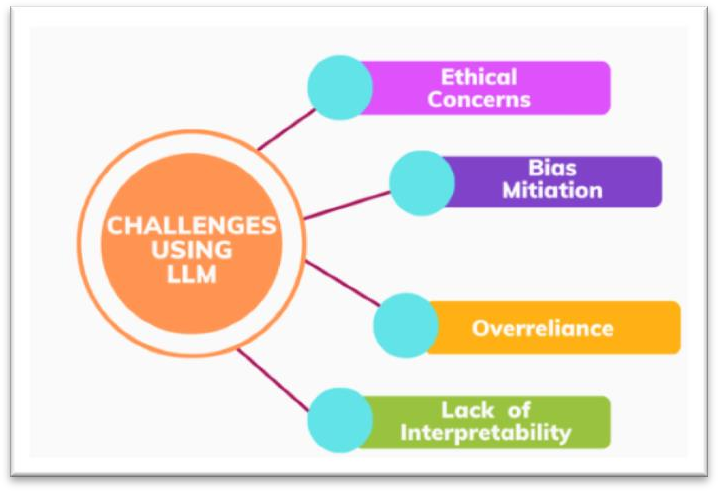
Figure 4: Challenges of LLM
CONCLUSION
Transformer architectures, from BERT to GPT-3 and beyond, have revolutionized various industries and applications. They have significantly boosted natural language understanding and generation, allowing for advanced tasks such as personalized treatment recommendations in healthcare, sentiment analysis in finance, and virtual instruction in education. The ability of transformer models to capture contextual relationships in language and process large amounts of data efficiently has been the driving force behind these advancements. Although transformer architectures have shown great promise, some critical considerations need to be addressed. For instance, the computational power required for training and deployment must be taken into account, along with the potential biases encoded in the training data and the protection of sensitive user information. Transformer models have emerged as potent tools in the field of natural language processing and have the potential to shape the future of NLP. Their ability to capture contextual information and generate coherent, contextually appropriate responses has opened up new possibilities for applications in various industries. Furthermore, the advancements in transformer architectures have highlighted the importance of ethical considerations, such as potential biases encoded in the training data. Researchers must work towards developing models that promote inclusiveness, equality, and equity. To make transformer models more accessible to a broader range of applications, researchers should continue to invest in developing more efficient and scalable transformer architectures that can handle larger datasets and complex tasks. Practitioners should prioritize data collection and curation processes to ensure that biases are minimized in the training data of transformer models. They can achieve this by using diverse data collection methods, carefully selecting training data sources and ongoing monitoring for biases during model development. Policymakers should collaborate with researchers and industry experts to establish guidelines and regulations for the responsible use of transformer architectures. This can involve requirements for transparency, accountability, and fairness in deploying transformer models, as well as measures to protect user privacy and data security. In this way, transformer architectures can unlock their full potential and revolutionize how we process and understand language.
REFERENCES
[1] Bender, E M., Gebru, T., McMillan-Major, A., & Shmitchell, S. (2021, March 1). On the Dangers of Stochastic Parrots. https://doi.org/10.1145/3442188.3445922
[2] Bin-Nashwan, S A., Sadallah, M., & Bouteraa, M. (2023, November 1). Use of ChatGPT in academia: Academic integrity hangs in the balance. Elsevier BV, 75, 102370-102370. https://doi.org/https://doi.org/10.1016/j.techsoc.2023.102370
[3] Gillioz, A., Casas, J., Mugellini, E., & Khaled, O A. (2020, September 26). Overview of the Transformer- based Models for NLP Tasks. Computer Science and Information Systems (FedCSIS), 2019 Federated Conference on. https://doi.org/10.15439/2020f20
[4] Gillioz, A., Casas, J., Mugellini, E., & Khaled, O A. (2020, September 26). Overview of the Transformer- based Models for NLP Tasks. https://doi.org/10.15439/2020f20
[5] Gupta, P., Ding, B., Guan, C., & Ding, D. (2024, February 1). Generative AI: A systematic review using topic modelling techniques. De Gruyter, 100066-100066. https://doi.org/https://doi.org/10.1016/j.dim.2024.100066
[6] How we build the highest confidence GPT-3 chatbots available in 2022. Width.ai. (n.d.). https://www.width.ai/post/gpt-3-chatbots
[7] Islam, S M R., Elmekki, H., Elsebai, A., Bentahar, J., Drawel, N., Rjoub, G., & Pedrycz, W. (2023, June 11). A Comprehensive Survey on Applications of Transformers for Deep Learning Tasks. arXiv (Cornell University). https://doi.org/10.48550/arxiv.2306.07303
[8] Javidan, A., Feridooni, T., Gordon, L., & Crawford, S A. (2023, December 1). Evaluating the Progression of Artificial Intelligence and Large Language Models in Medicine through Comparative Analysis of ChatGPT-3.5 and ChatGPT-4 in Generating Vascular Surgery Recommendations. Elsevier BV, 100049- 100049. https://doi.org/https://doi.org/10.1016/j.jvsvi.2023.100049
[9] Kasneci, E., Sessler, K., Küchemann, S., Bannert, M., Dementieva, D., Fischer, F., Gasser, U., Groh, G., Günnemann, S., Hüllermeier, E., Krusche, S., Kutyniok, G., Michaeli, T., Nerdel, C., Pfeffer, J., Poquet, O., Sailer, M., Schmidt, A., Seidel, T., . . . Kasneci, G. (2023, April 1). ChatGPT for good? On opportunities and challenges of large language models for education. Learning and Individual Differences, 103, 102274- 102274. https://doi.org/10.1016/j.lindif.2023.102274
[10] Memarian, B., & Doleck, T. (2023, August 1). ChatGPT in education: Methods, potentials, and limitations. Elsevier BV, 1(2), 100022-100022. https://doi.org/https://doi.org/10.1016/j.chbah.2023.100022
[11] Meduri, K., Nadella, G. S., Gonaygunta, H., Maturi, M. H., & Fatima, F. (2024). Efficient RAG Framework for Large-Scale Knowledge Bases.
[12] Meduri, K., Gonaygunt, H., & Nadella, G. S. (2024). Evaluating the effectiveness of AI-driven frameworks in predicting and preventing cyber attacks. International Journal of Research Publication and Reviews, 5(3), 6591–6595. https://doi.org/10.55248/gengpi.5.0324.0875
[13] Niu, H., Omitaomu, O A., Langston, M A., Olama, M., Özmen, Ö., Klasky, H., Laurio, A., Ward, M., & Nebeker, J R. (2024, February 1). EHR-BERT: A BERT-based model for effective anomaly detection in electronic health records. Elsevier BV, 150, 104605-104605.
https://doi.org/https://doi.org/10.1016/j.jbi.2024.104605
[14] Rogers, A., Kovaleva, O., & Rumshisky, A. (2020, December 1). A Primer in BERTology: What We Know About How BERT Works. Transactions of the Association for Computational Linguistics, 8, 842-866. https://doi.org/10.1162/tacl_a_00349
[15] Strubell, E., Ganesh, A., & McCallum, A. (2020, April 3). Energy and Policy Considerations for Modern Deep Learning Research. Proceedings of the ... AAAI Conference on Artificial Intelligence, 34(09), 13693-13696. https://doi.org/10.1609/aaai.v34i09.7123
[16] TaghiBeyglou, B., & Rudzicz, F. (2024, March 1). Context is not key: Detecting Alzheimer’s disease with both classical and transformer-based neural language models. Elsevier BV, 6, 100046-100046. https://doi.org/https://doi.org/10.1016/j.nlp.2023.100046
[17] Turner, R E. (2023, April 20). An Introduction to Transformers. arXiv (Cornell University). https://doi.org/10.48550/arxiv.2304.10557
[18] Wan, B., Wu, P., Yeo, C K., & Li, G. (2024, March 1). Emotion-cognitive reasoning integrated BERT for sentiment analysis of online public opinions on emergencies. Elsevier BV, 61(2), 103609-103609. https://doi.org/https://doi.org/10.1016/j.ipm.2023.103609
[19] Xiao, T., & Zhu, J. (2023, November 29). Introduction to Transformers: an NLP Perspective. arXiv (Cornell University). https://doi.org/10.48550/arxiv.2311.17633
[20] Zhang, C., Sun, S., Wenmao, H., & Zhao, P. (2024, February 1). FDR-TransUNet: A novel encoder-decoder architecture with vision transformer for improved medical image segmentation. Elsevier BV, 169, 107858-107858. https://doi.org/https://doi.org/10.1016/j.compbiomed.2023.107858
[21] Zhang, S., Fan, R., Liu, Y., Chen, S., Li, Q., & Zeng, W. (2023, January 1). Applications of transformer-based language models in bioinformatics: a survey. Bioinformatics advances, 3(1). https://doi.org/10.1093/bioadv/vbad001.
About the Author
Deepak Kumar
Dr. Deepak Kumar holds a Ph.D. in Information Technology and has over a decade of experience in software engineering and research. His work spans machine learning, big data, cybersecurity, IoT, and blockchain. He has published multiple peer-reviUnidashpers in reputed international journals and conferences, contributing significantly to emerging tech domains. As an active reviewer, he evaluates scholarly articles for high-impact journals, ensuring academic rigor. Dr. Kumar’s research blends theoretical depth with real-world applications, often collaborating with industry leaders to advance intelligent systems. With extensive experience as a Software Engineer on data platforms, he has built scalable ETL pipelines, optimized petabyte-scale data workflows, enforced data compliance, and developed insightful dashboards using tools like Tableau and Unidash, supporting critical business decisions across industries including social media, e-commerce, and transportation.He is also senior member of IEEE and Sigma Xi.
View Deepak Kumar's profileNeed more information?
Our team of experts can provide custom guidance on implementing the strategies outlined in this whitepaper for your organization.