
The Wiz Revolution: Redefining Cloud Security in 2025
INTRODUCTION: WHY CLOUD SECURITY LOOKS DIFFERENT TODAY
Cloud security is no longer a background IT concern—it has become a business-critical priority. As enterprises rapidly expand across AWS, Microsoft Azure, Google Cloud, and hybrid environments, the traditional security perimeter has effectively disappeared. Infrastructure is ephemeral, access is distributed across teams, and attack surfaces grow by the day.
This blog explores how Wiz, a unified cloud-native security platform, addresses these challenges at scale. With approximately 50% of Fortune 100 companies relying on Wiz as of 2024–2025, the platform represents a shift toward context-driven cloud security intelligence—moving beyond alerts and tools toward meaningful risk prioritization.
Figure 1: Cloud infrastructure security complexity across AWS, Azure, GCP, and hybrid environments requires unified visibility.
PART 1: THE CLOUD SECURITY CRISIS: WHY WIZ EXISTS
Complexity Without Meaningful Visibility
Cloud adoption has delivered speed, scalability, and cost optimization. However, it has also introduced security complexity that legacy tools were never designed to handle.
Industry data highlights this growth:
- The global cloud security market was valued at about forty point seven billion dollars in 2023 and is projected to reach nearly sixty-two point nine billion dollars by 2028.
- Cloud security is growing steadily at an annual rate of around nine point one percent.
- The global cloud computing market reached approximately six hundred eighty billion dollars in 2024.
- Enterprise cloud infrastructure spending rose to about seventy-four billion dollars in late 2023, up twelve billion dollars year over year.
Despite this scale, the real problem is not visibility—it’s** useful visibility**. Security teams face:
- Thousands of alerts daily with little context
- High false-positive rates
- Agent-based tools causing performance and deployment friction
- Blind spots in containers, serverless, and ephemeral workloads
- IAM sprawl creating risky access combinations
Why Legacy Tools Fail in the Cloud
Traditional security tools were built for static environments:
- Agent-based designs create overhead and operational drag
- Isolated signal analysis treats vulnerabilities, misconfigurations, and identity risks separately
- Reactive alerting without explaining exploitability or business impact
- Tool sprawl, requiring multiple platforms for CSPM, CWPP, CIEM, and vulnerability management
When Wiz was founded in 2020 by former Microsoft cloud security leaders—including Assaf Rappaport, Amy Luttwak, Roy Reznik, and Yinon Costica—their insight was clear: cloud security needed a fundamentally different architecture.
PART 2: AGENTLESS BY DESIGN: WIZ’S CORE INNOVATION
How Agentless Security Works
Wiz introduced an agentless-first model, connecting directly to cloud platforms using secure, read-only APIs rather than deploying agents on workloads.
Key elements include:
- Native API integration with AWS, Azure, GCP, and OCI
- Snapshot-based scanning in isolated environments
- Deep analysis of VMs, containers, Kubernetes, and serverless functions
- Coverage of ephemeral resources without blind spots
Business Impact
This approach delivers:
- Zero performance overhead
- Faster onboarding (days instead of weeks)
- Simplified operations with no agent management
- Complete multi-cloud visibility
- Reduced burden on security teams
PART 3: THE WIZ SECURITY GRAPH: TURNING CONTEXT INTO INTELLIGENCE
From Isolated Alerts to Attack Paths
At the core of Wiz is the Wiz Security Graph, a proprietary knowledge graph that maps relationships between cloud resources, identities, configurations, and data.
Instead of isolated findings like:
- VM X has vulnerability Y
- Bucket W is public
Wiz answers:
- Can this vulnerability lead to sensitive data exposure?
- What exact path could an attacker exploit?
- Which identities create dangerous privilege combinations
Real Attack Path Example
An attack path might look like:
- EC2 instance with a vulnerability
- IAM role with S3 access
- S3 bucket containing PII
- Bucket lacks encryption
- Role lacks MFA
Result: A clearly exploitable path with high business impact—something legacy tools fail to explain.
Figure 2: Security graph visualization showing interconnected resources and exploitable paths.
PART 4: CORE CAPABILITIES: COMPREHENSIVE CLOUD SECURITY IN ONE PLATFORM
Cloud Security Posture Management (CSPM)
- Continuous configuration analysis
- Compliance mapping (CIS, PCI DSS, HIPAA, SOC 2, ISO 27001)
- Drift detection
- Unified multi-cloud coverage
Cloud Workload Protection (CWPP)
- VM vulnerability correlation and hardening
- Container and Kubernetes image scanning
- Runtime threat detection
- Serverless IAM and dependency analysis
Cloud Infrastructure Entitlement Management (CIEM)
- Excessive privilege identification
- Trust relationship mapping
- Permission chain analysis
- Detection of “toxic combinations” where exposure, vulnerability, and privilege intersect
Cloud Data Security (DSPM)
- Shadow data discovery
- PII detection and classification
- Exposure analysis for storage and databases
- Identification of improperly secured backups and caches
AI Security Posture Management (AI-SPM)
- Detection of unauthorized AI usage
- Sensitive data leakage into training pipelines
- Model access risk analysis
- Prompt injection vulnerability identification
This expansion reflects the evolution of cloud security into the AI layer.
PART 5: SHIFTING LEFT: DEVELOPER-CENTRIC CLOUD SECURITY
Code-to-Cloud Visibility
Wiz integrates security directly into development workflows:
- IaC scanning (Terraform, CloudFormation, Bicep, Ansible)
- CI/CD image scanning
- Secrets detection in source repositories
- Supply chain security assessment
The DevSecOps Effect
By providing line-level remediation guidance, Wiz:
- Reduces false positives
- Improves remediation speed
- Aligns security with developer workflows
- Lowers risk without increasing engineering burden
PART 6: THE MARKET OPPORTUNITY – CLOUD SECURITY IN 2025
Industry Trends Validating Cloud-Native Security
Trend 1: Multi-Cloud Adoption at Scale
- 85%+ of enterprises now use multi-cloud strategies
- Unified security across AWS, Azure, GCP, and others is non-negotiable
- Platform consolidation reducing tool sprawl and
complexity Trend 2: Zero-Trust Architecture Maturity
- Perimeter-based security is increasingly obsolete
- Continuous verification of every identity and resource is standard practice
- Graph-based intelligence aligns with zero-trust
principles Trend 3: DevSecOps Mainstream Adoption
- Security shifting left into development pipelines as best practice
- Code-to-cloud visibility becoming foundational for modern engineering
- Developer self-service security remediation accelerating
remediation Trend 4: AI-Driven Security Operations
- Enterprises adopting AI/ML for security operations and threat detection
- AI enabling real-time analysis of massive cloud data volumes
- Automated threat detection and incident response
accelerating Trend 5: Regulatory Compliance Acceleration
- GDPR, CCPA, HIPAA, and emerging privacy regulations driving compliance needs
- Data Security Posture Management critical for regulatory compliance
- Continuous compliance monitoring replacing point-in-time audits
Wiz's Market Position
Wiz is uniquely positioned to serve this market opportunity:
- Enterprise-Proven Platform: 50% of Fortune 100 adoption signals production reliability and enterprise credibility
- Comprehensive CNAPP Coverage: Unified platform consolidates CSPM, CWPP, CIEM, vulnerability management, DSPM, and AI-SPM
- Agentless Innovation: Platform design reduces deployment friction and operational overhead
- Developer Alignment: DevSecOps approach resonates with modern engineering cultures and improves security team productivity
PART 7: OPERATIONALIZING WIZ – ENTERPRISE IMPLEMENTATION BEST PRACTICES
Phase 1: Discovery and Planning
Week 1-2:
- Cloud inventory assessment across all environments
- Current security tool and process audit
- Stakeholder alignment (Security, Engineering, Operations, Compliance)
- Define measurable success metrics and KPIs
Phase 2: Rapid Deployment
Week 3-4:
- Connect cloud environments via API (read-only, no agents)
- Enable all cloud provider integrations
- Configure risk prioritization policies aligned with business risk
- Set up CI/CD pipeline integrations
Key Advantage: Unlike traditional tools, Wiz operational setup requires no agent deployment, enabling faster time-to-value.
Phase 3: Intelligence and Prioritization
Week 5-8:
- Security Graph builds comprehensive relationship mapping
- Attack paths identified and ranked by exploitability
- Risk ownership assigned to engineering teams
- Remediation workflows integrated with ticketing systems (Jira, ServiceNow, etc.)
Phase 4: Continuous Operations
Ongoing:
- Daily risk reporting and trending analysis
- Automated remediation for policy violations
- Continuous compliance monitoring against frameworks
- Emerging threat detection and incident response coordination
Integration Architecture
Wiz integrates with enterprise tools across the security and DevOps stack:
Ticketing Systems: Jira, ServiceNow, Azure DevOps
Monitoring & Analytics: Splunk, Datadog, New Relic
Cloud Platforms: AWS, Azure, GCP, OCI Container Registries: ECR, ACR, GCR, Docker Hub
CI/CD Systems: GitHub Actions, GitLab, Jenkins, CloudBuild Identity Platforms: Okta, Azure AD, Ping Identity
PART 8: REAL-WORLD CUSTOMER APPLICATIONS
Enterprise Financial Services Organization
Context: Large organization with 12,000+ cloud assets across multiple cloud platforms; multiple security teams managing separate tools; high compliance audit requirements.
Approach:
- Consolidated multiple CSPM, CWPP, and CIEM tools into unified Wiz platform
- Deployed agentless scanning across all environments
- Integrated with existing ITSM system for remediation workflow
automation Reported Outcomes:
- Significant reduction in alert volume and false positives
- Improved average remediation timelines
- Enhanced compliance framework coverage
- Security team operational efficiency improvements
- Reduced security team time spent on alert triage
Rapid-Growth SaaS Company
Context: Multiple development teams deploying containerized applications; rapid deployment velocity; need to prevent vulnerable artifacts from reaching production; limited security team size.
Approach:
- Integrated Wiz into CI/CD pipeline (GitHub Actions)
- Enabled real-time Kubernetes security scanning
- Implemented CIEM for IAM analysis across cloud
environments Reported Outcomes:
- Prevention of vulnerable images reaching production
- Developers receive remediation guidance at code review time
- Improved IAM permission management across teams
- Faster security issue resolution timelines
- Reduction in security incidents in production environments
*Note: Specifc numerical results vary by organization and implementation approach. Consult case studies for organization-specifc projections. *
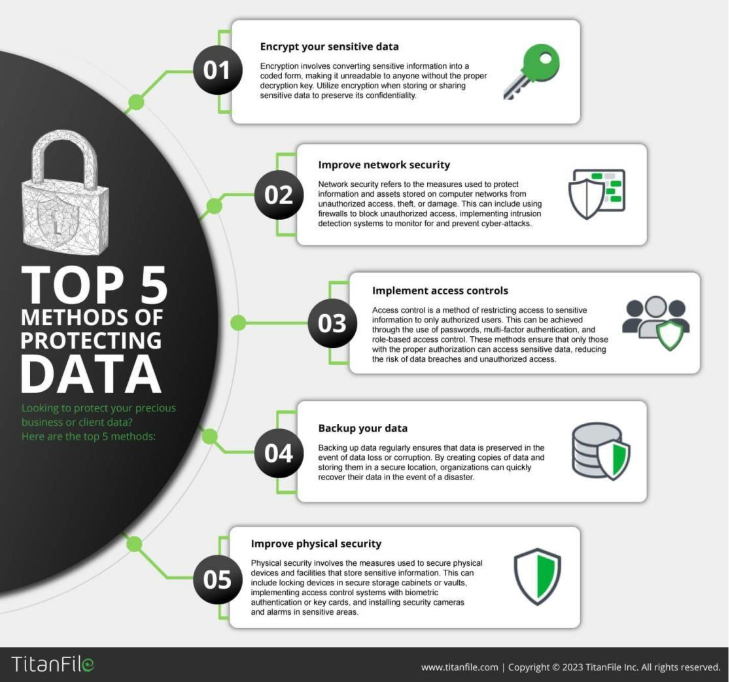
Figure 3: Data protection and security strategies across infrastructure, identity, and encryption layers
PART 9: CLOUD DETECTION AND RESPONSE – THE NEXT GENERATION
Extending Beyond Posture Management
In 2024–2025, cloud security matured beyond static configuration analysis toward real-time threat detection and response capabilities:
Cloud Detection & Response (CDR) Capabilities:
- Continuous monitoring of cloud workload activity and behavior
- Detection of suspicious configuration changes in real-time
- Correlation of cloud provider signals with infrastructure telemetry
- Incident response automation with pre-built response playbooks
- Forensic analysis with code-commit traceability for
investigation Architecture Evolution:
- Agentless Collection Layer: Continuous cloud telemetry collection via native APIs
- Optional Sensor Layer: For organizations requiring enhanced visibility (Linux kernel-level visibility via eBPF-based sensors)
- Unified Intelligence: All signals correlated through the Wiz Security Graph
This represents the convergence of traditional CSPM + CWPP capabilities with modern threat detection and response—reducing the need for separate point-solution tools across the security stack
PART 10: THE FUTURE OF CLOUD SECURITY – CONTEXT OVER VOLUME
Why Context Matters
The fundamental principle that shaped Wiz's architecture applies increasingly across all modern cybersecurity:
Without Context: "VM X has vulnerability CVE-2024-XXXX"
With Context: "VM X has vulnerability CVE-2024-XXXX, which is exploitable because it has an IAM role with S3 access to a bucket containing customer PII, which lacks encryption and is accessible from the public internet. Attack path: EXPLOITABLE. Business impact: HIGH."
The second approach enables intelligent security prioritization. It transforms security from a detection problem into a risk-based remediation problem where teams focus on the exposures that matter most to their business.
Emerging Threat Landscape
- Cloud Infrastructure as an Attack Vector
- Compromised cloud credentials accessing massive data volumes
- Misconfigured storage buckets exposing sensitive data
- Excessive IAM permissions enabling privilege escalation
- AI/ML Supply Chain Risks
- Poisoned training data corrupting model behavior
- Stolen models representing significant intellectual property loss
- Prompt injection attacks targeting LLM-powered applications
- Kubernetes and Container Escape Vulnerabilities
- Container escape exploits enabling host compromise
- Kubernetes API privilege escalation
- Image vulnerability dependency chains
- API and Serverless Abuse
- Function-to-function privilege escalation in serverless environments
- API rate limiting abuse and denial of service attacks
- Cold-start security gaps in function initialization
The Evolution Path for Cloud Security
The industry is evolving from reactive detection toward proactive intelligence and eventually autonomous remediation:
- Current State (2025): Comprehensive visibility, attack path analysis, and developer-centric remediation guidance
- Near-Term (2026-2027): Enhanced autonomous remediation, threat hunting automation, and AI-powered risk prediction
- Future (2028+): Predictive security posture modeling, self-healing infrastructure, and AI-native security operations
CONCLUSION: CONTEXT IS THE FUTURE OF CLOUD SECURITY
Cloud computing has fundamentally changed how organizations build, scale, and operate infrastructure. With this change comes a corresponding evolution in security. Traditional perimeter-based, agent-deployed, multi-tool security strategies are incompatible with cloud-native architecture.
Wiz exemplifies the evolution of cloud security through four core principles:
- Agentless Architecture: Secure at the platform level, not the workload level
- Graph-Based Intelligence: Relationship modeling reveals attack paths that isolated signals cannot
- Context-Driven Prioritization: Focus remediation efforts where business impact is highest
- Developer Empowerment: Shift security left into development pipelines with actionable guidance
Key Platform Metrics
According to company data and public sources:
- Approximately 50% of Fortune 100 companies rely on Wiz for cloud security, according to public announcements as of 2024–2025
- 5 million cloud workloads protected across all major cloud platforms
- 230 billion files scanned daily across customer environments
- Fastest cloud security company to reach $100M ARR: Achieved in 18 months after founding
- 1 billion
Marketplace Innovation
Wiz's go-to-market approach demonstrates marketplace optimization: over 70% of Wiz business is billed through cloud marketplaces, reducing sales cycles and improving customer procurement efficiency. In one Microsoft Marketplace Rewards campaign, Wiz reported 1,500% ROI on marketplace credit incentives, illustrating the effectiveness of cloud marketplace channels for software adoption.
The Path Forward
As cloud infrastructure continues to expand, as AI becomes embedded in critical systems, and as regulatory compliance demands intensify, platforms that combine:
- Comprehensive cloud coverage (CSPM, CWPP, CIEM, DSPM, AI-SPM)
- Agentless deployment efficiency
- Graph-based attack path analysis
- Developer-friendly remediation workflows
will play a defining role in keeping security pace with innovation.
**The future of cloud security is not more alerts. It's not more agents. It's not more tools. The future is intelligent, contextual, developer-aligned security that enables organizations to build faster and more securely. **
REFERENCES
[1] Wiz. (2025). Customers - 50% of Fortune 100. Retrieved from https://www.wiz.io/customers
[2] Persistence Market Research. (2024). Cloud Security Market Size, Share & Trends Analysis, 2025. Cloud security market projected to reach 40.7 billion in 2023 at 9.1% CAGR.
[3] Contrary Research. (2025). Wiz Business Breakdown & Founding Story. Global cloud computing market estimated at 74 billion in Q4 2023.
[4] Wiz. (2025). About - Company Milestones and Founding Story. Retrieved from https://www.wiz.io/about
[5] Wiz. (2025). Platform Overview and Core Capabilities. Comprehensive documentation of CSPM, CWPP, CIEM, DSPM, AI-SPM, and agentless architecture.
[6] Microsoft Partner. (2024). Wiz uncovers the alchemy of the Microsoft commercial marketplace. Case study demonstrating 1,500% ROI from Microsoft Marketplace Rewards campaign. Retrieved from https://partner.microsoft.com/en-gb/case-studies/wiz
About the Author
Havish Ram Padarthi
Havish Ram is an early-career Software Engineer with a strong foundation in application development, code quality, and system reliability. He is passionate about building efficient and scalable solutions while continuously learning new technologies. With a keen eye for best practices, he strives to write clean, maintainable code. Havish is eager to contribute effectively and grow within a collaborative team environment.
View Havish Ram Padarthi's profile