
From Posture to Protection: Building a Proactive Cloud Security Program with Wiz
ABSTRACT
The accelerating adoption of multi-cloud environments has reshaped the cybersecurity landscape. Traditional data-center models, built on static perimeters and manual controls, cannot keep pace with the dynamic, API-driven cloud infrastructure. While Cloud Security Posture Management (CSPM) and SaaS Security Posture Management (SSPM) provide essential foundational coverage, they fall short of addressing modern attack techniques that exploit toxic combinations across infrastructure, identity, and data. This whitepaper presents a comprehensive model for evolving from reactive posture management to proactive cloud protection using the Wiz Cloud Security Platform. By leveraging the Wiz Security Graph, a unified intelligence layer that correlates vulnerabilities, identities, misconfigurations, network exposure, and data sensitivity, organizations can eliminate noise, identify truly exploitable attack paths, and empower teams across the software lifecycle to remediate risk effectively. The document outlines the strategic drivers behind this evolution, provides an in-depth architectural analysis of the Security Graph, and offers a blueprint for operationalizing DevSecOps, continuous monitoring, data protection, and cloud detection and response. Through this transformation, organizations can achieve a resilient, measurable, and mature cloud security program aligned with governance and business goals.
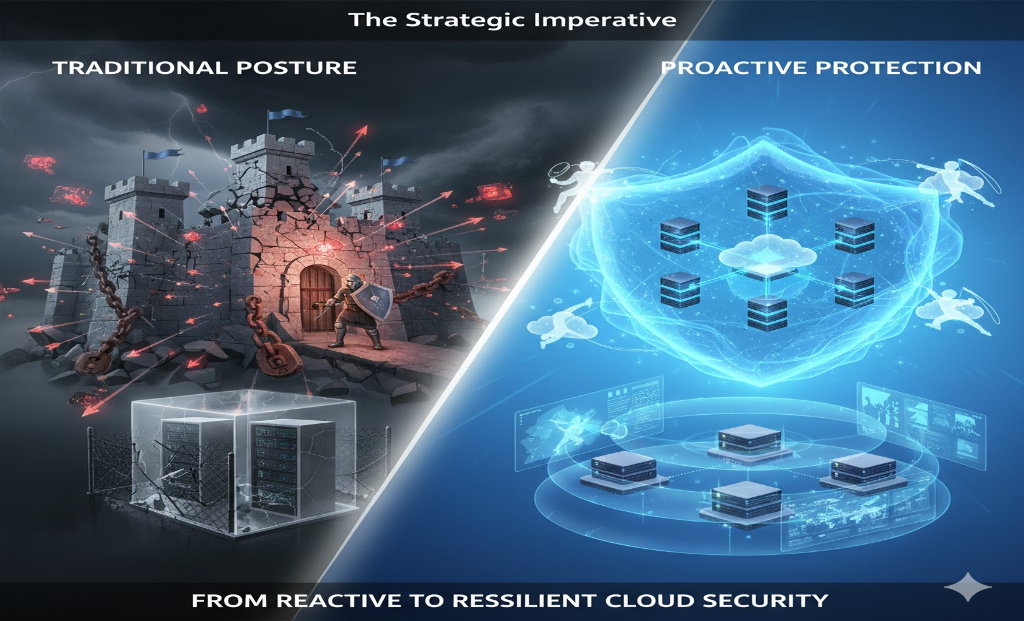
THE FOUNDATIONAL SHIFT: FROM STATIC POSTURE TO DYNAMIC PROTECTION
A robust cloud security program must first acknowledge the inherent limitations of conventional tools, which are often designed for point solutions. While foundational security components are necessary, their siloed operation prevents security teams from identifying and mitigating complex, multi-layered attacks.
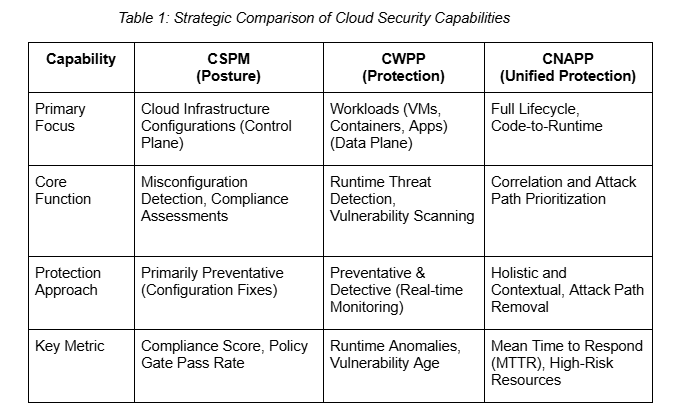
The Limits of Traditional Cloud Security Posture Management (CSPM)
Cloud Security Posture Management (CSPM) plays a critical role in securing cloud infrastructure, often referred to as the control plane. CSPM is fundamentally concerned with how cloud resources are organized, connected, and configured. It operates primarily as a preventative mechanism, designed to spot and correct security misconfigurations before they can be exploited by malicious actors, thereby establishing a strong, secure foundation.
CSPM is highly effective in automating compliance assurance. It provides continuous assessments that map cloud security findings to relevant regulatory requirements and industry standards, such as GDPR, HIPAA, and PCI DSS. For teams that frequently struggle with manually tracking changes to regulatory frameworks, CSPM automates compliance audits and flags policy drift in real-time. This continuous assessment generates detailed audit trails and reports, simplifying compliance verification, strengthening customer trust, and proactively reducing the risk of regulatory fines and legal repercussions.
However, CSPM is limited to configuration security. It performs a first-order analysis, ensuring that the settings and policies of the cloud infrastructure are correct. The inherent incompleteness of posture management arises because it lacks visibility into the data plane, the running applications, containers, and serverless functions. An infrastructure that passes all configuration checks can still harbor application-level vulnerabilities, exposed secrets, or embedded malware, creating critical, unaddressed attack vectors. CSPM cannot patch these application-level vulnerabilities.
Strategic Distinction: The Convergence of CSPM, CWPP, and CIEM in CNAPP
Addressing the limitations of CSPM requires integrating capabilities focused on both the application and identity layers.
Cloud Workload Protection Platform (CWPP)
CWPP functionality is essential for protecting workloads running within the cloud, including virtual machines (VMs), containers, and databases. This addresses the data plane. CWPP focuses specifically on workload security by employing a combination of preventative and detective controls. These tools actively monitor workloads for suspicious behavior, providing real-time threat detection, vulnerability scanning, and defense against live threats, including potential zero-day exploits.
Cloud Infrastructure Entitlement Management (CIEM)
The third critical vector is identity. Cloud environments, particularly multi-cloud architectures, are highly susceptible to credential theft and privilege escalation. CIEM focuses on managing and securing identities and access permissions, ensuring that access privileges adhere to organizational policies. By enforcing the principle of least privilege, CIEM combats insider threats and unauthorized access, managing the security of user identities and entitlements.
Cloud-Native Application Protection Platform (CNAPP) as the Best Practice
The strategic mandate for modern cloud security is the convergence of CSPM, CWPP, and CIEM functionality into a unified Cloud-Native Application Protection Platform (CNAPP). This unification is crucial because complex cloud attacks rarely rely on a single flaw; they often exploit chains of vulnerabilities that span misconfiguration, identity, and application flaws. A unified CNAPP simplifies security management by eliminating the need for separate tools and interfaces, thereby providing a consolidated view of the entire cloud environment. The platform bridges infrastructure security and workload protection, correlating misconfigurations with runtime threats to achieve more accurate prioritization based on the real business impact of an attack path.
Proactive Security Defined: Minimizing the Attack Surface through Contextual Prevention
Proactive security is defined by a strategic shift: focusing security efforts on preventing potential attack paths, rather than merely reacting to threats after they are detected. This approach requires managing security controls across the five foundational pillars of the cloud infrastructure
- Identity and Access Management (IAM): Ensuring that only authenticated and authorized users can access resources, using controls like multi-factor authentication and role-based access control.
- Infrastructure Protection: Implementing network security (firewalls, IDS/IPS), server hardening, and securing virtual machines and containers.
- Data Protection: Safeguarding data both at rest and in transit through encryption, tokenization, and data masking.
- Detection Controls: Utilizing tools that provide real-time insights and alerts to identify suspicious activity.
- Incident Response: Establishing protocols for identifying, containing, eradicating, and recovering from security incidents.
The unified CNAPP provides the correlated view necessary to manage and optimize security controls across all five pillars simultaneously, ensuring the security strategy is focused on combined, high-impact risks rather than isolated findings.
WIZ’S ARCHITECTURAL FRAMEWORK FOR CONTEXTUAL RISK PRIORITIZATION
Wiz’s approach to CNAPP is founded on architectural choices that prioritize efficiency, complete visibility, and contextual prioritization. These choices—agentless deployment and graph-based modeling—are the mechanisms by which organizations transition from static posture checks to dynamic, proactive protection.
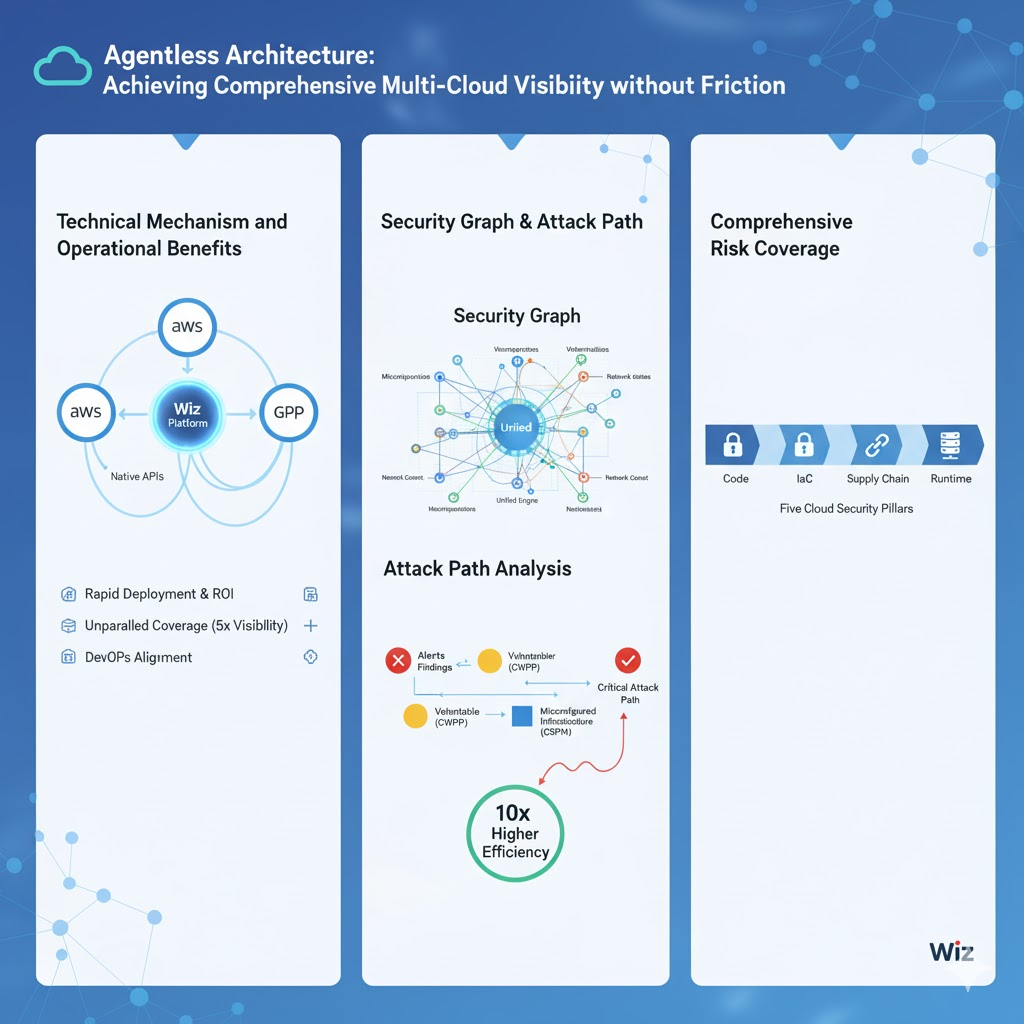
Agentless Architecture: Achieving Comprehensive Multi-Cloud Visibility without Friction
The fundamental challenge in securing large, multi-cloud environments is achieving comprehensive coverage without imposing performance bottlenecks or operational overhead. Wiz addresses this through a robust agentless architecture.
Technical Mechanism and Operational Benefits
The agentless approach leverages the native APIs provided by Cloud Service Providers (CSPs) to detect and scan resources and workloads. This bypasses the need to install, configure, and maintain agents, which can be expensive, slow down workloads, and are frequently rejected by DevOps teams.
This architecture yields immediate and measurable operational benefits:
- Rapid Deployment and ROI: The platform can be connected in minutes, providing immediate visibility into the cloud environment and its security posture, which directly translates to an immediate Return on Investment (ROI).
- Unparalleled Coverage: The approach ensures full coverage, eliminating blind spots and providing 100% visibility into all cloud resources and risks, from infrastructure to data, across all cloud providers and services. This 5x improved visibility is foundational for accurate risk assessment.
- DevOps Alignment: By eliminating the friction associated with performance-impacting or complex agent maintenance, the agentless model fosters the self-service, collaborative culture of DevSecOps, thereby reducing operational complexity and associated costs. The architecture itself is the enabler of the claimed high operational efficiency.
Graph-Based Security Modeling: Correlating Risk Across the Cloud Stack
To effectively prioritize risk, security teams require a deep, contextual understanding of how disparate assets are related. Wiz builds a dynamic, graph-based context, a "Security Graph", that maps all cloud resources and their relationships using a node-and-edge structure.
The graph is the core unified risk engine. It correlates all relevant security inputs, including misconfigurations, workload vulnerabilities, identity exposures, and network context. This contextual correlation provides an intuitive approach to defining complex security queries that accurately represent genuine risks. A graph-based view makes it easy for practitioners across various skill levels to understand the context surrounding risks, thereby accelerating response times.
Attack Path Analysis: Prioritizing Critical Threats over Voluminous Findings
In dynamic cloud environments, security teams are often paralyzed by alert fatigue resulting from the massive volume of vulnerabilities detected by traditional scanners. The CNAPP's graph model fundamentally shifts the security focus from merely fixing every vulnerability to actively eliminating exploitable attack paths.
Identifying Criticality
The graph-based security model assesses risk criticality by understanding how individual weaknesses combine to create a potential, complex attack path into the environment. For example, a severe vulnerability (CWPP finding) in a container may be prioritized only if the underlying infrastructure (CSPM finding) is misconfigured to allow public network access, and the service identity (CIEM finding) has elevated privileges. Without the correlation provided by the graph, these findings remain isolated and unconnected.
By focusing effort on breaking these few, critical attack paths identified by the graph, security teams can proactively reduce the overall attack surface before a breach occurs. This contextual approach is the mechanism that achieves 10x higher efficiency, as security engineering time is concentrated only on the findings that present true exploitability and business impact. This rigorous prioritization based on context is essential for reducing false positives and maximizing the productivity of constrained security teams.
Comprehensive Risk Coverage
Wiz’s CNAPP ensures comprehensive security throughout the entire application lifecycle, securing not only the runtime environment but also the development stages. This includes securing the code itself, ensuring Infrastructure as Code (IaC) templates are free from misconfigurations, and protecting the software supply chain against vulnerabilities in third-party components. This end-to-end approach, combined with data security posture management (DSPM), ensures all five cloud security pillars are covered.
OPERATIONALIZING THE PROGRAM: THE THREE PILLARS OF CLOUD DELIVERY AND GOVERNANCE
To transition from tool adoption to a mature, proactive security program, organizations must structure their operations around continuous governance and oversight. This governance model is defined by three interconnected pillars that span the entire development and deployment lifecycle.
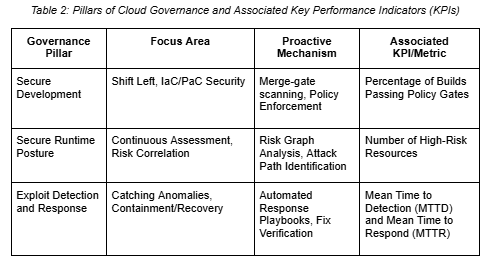
Pillar 1: Secure Development (Shifting Left)
The Secure Development pillar focuses on integrating security measures as early as the code stage, a practice often referred to as "shifting left". The primary objective is to identify security issues when they are least costly and easiest to resolve, thereby preventing them from propagating into production environments.
Core Components and Automation
The operational components of this pillar involve automated security checks integrated directly into CI/CD pipelines:
- IaC and Policy as Code (PaC): Infrastructure provisioning is managed via code (IaC), and security policies are defined and enforced via code (PaC).
- Merge-Gate Scanning: Automated scanning for risky code, exposed secrets, and software composition risks occurs before code is merged into the primary branch.
- Contextual Feedback: By correlating code findings (e.g., from tools like Checkmarx) with potential cloud attack paths identified by the CNAPP, developers receive actionable, contextual alerts. This ensures security feedback is precise and relevant, fostering collaboration and preventing security concerns from delaying deployment initiatives.
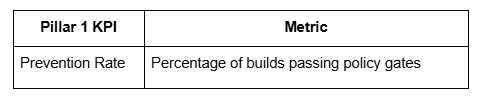
The effectiveness of this shift is measured by the quality of the security gate enforcement, reflected in the following KPI:
Pillar 2: Secure Runtime Posture
The Secure Runtime Posture pillar ensures continuous protection and governance of the live, deployed environment. This pillar utilizes the agentless multi-cloud inventory to discover all cloud assets across the estate.
Continuous Monitoring and Governance
The core mechanism is the continuous assessment of configuration against security baselines and regulatory frameworks. This involves continually evaluating the environment's compliance posture against standards such as PCI DSS, HIPAA, and GDPR, thereby streamlining audit preparation and simplifying compliance reporting.
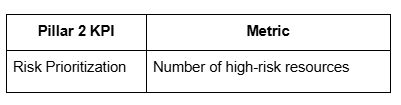
Crucially, this pillar utilizes Risk Graph Correlation. The security graph continuously connects and analyzes changes in configurations, vulnerabilities, identity exposures, and network context to uncover newly created exploitable attack paths and their root causes. This constant updating of the attack path topology ensures that the security team focuses its runtime efforts on the highest-priority, active risks.
The central KPI for this pillar reflects the team’s ability to minimize active risk exposure:
Pillar 3: Exploit Detection and Response
The final pillar focuses on resilience, aiming to rapidly detect anomalous incidents and execute automated containment actions before security events can mature into significant breaches.
Automated Containment and Verification
This pillar integrates runtime threat detection to catch cloud attacks in real-time without compromising performance. The platform's ability to trigger immediate, automated response playbooks is central to minimizing impact. Automated containment actions, such as auto-quarantine of compromised or infected assets, credential revocation, and policy updates, curb lateral spread and dramatically reduce the mean time to contain. These playbooks can execute actions without human intervention, though human-in-the-loop approvals can be configured for high-impact changes. Finally, the process includes fix verification, validating that all remediation efforts were effective and on point.
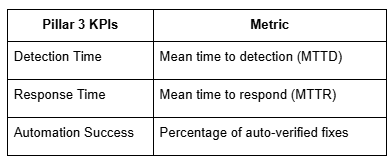
The effectiveness of this pillar is measured by time-based resilience metrics:
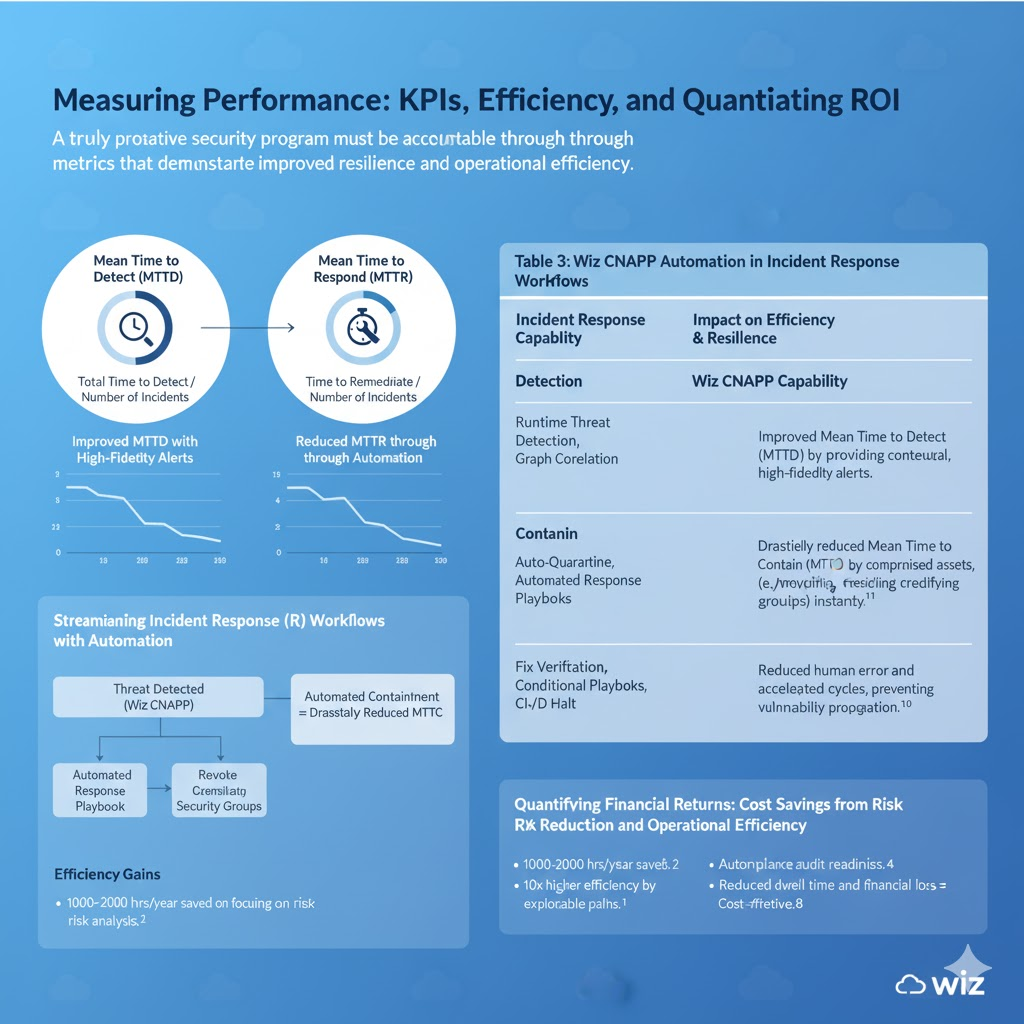
MEASURING PERFORMANCE: KPIs, EFFICIENCY, AND QUANTIFYING ROI
A truly proactive security program must be accountable through quantifiable metrics that demonstrate improved resilience and operational efficiency. The shift from traditional security metrics (e.g., total volume of findings) to performance-based indicators is essential for confirming the program’s success.
Operationalizing Detection: MTTD
Mean Time to Detect (MTTD) is a measure of the effectiveness of detection controls, calculated by dividing the total time required to detect all incidents over a specific timeframe by the number of incidents. Real-time insights and alerts are crucial elements for reducing this timeframe.
Wiz’s CNAPP improves MTTD by consolidating data across all cloud layers. The graph-based correlation ensures that detection focuses on high-fidelity, contextual alerts that represent exploitable attack paths. This precision minimizes the time security teams waste on investigating low-context noise, ensuring that the necessary security controls are implemented to detect suspicious activity immediately.
Minimizing Impact: MTTR
Mean Time to Respond (MTTR), sometimes called Mean Time to Resolution, is the average interval between the detection of an incident and its remediation. MTTR is the primary measure of the organization’s incident response plan efficiency and its ability to contain and remediate cyber threats. Lowering MTTR is critical, as it directly minimizes the financial, operational, and reputational impact of a security incident. The adoption of DevSecOps practices is associated with enabling faster recovery times.
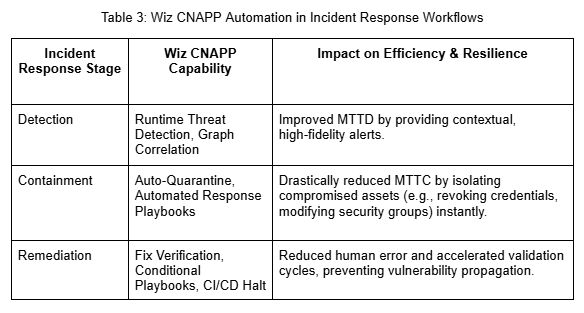
Streamlining Incident Response (IR) Workflows with Automation
Automation is the most significant factor in dramatically reducing MTTR and strengthening organizational resilience. Since cloud threats evolve rapidly, relying on manual processes significantly slows response times and increases the likelihood of human error.
The Role of Automated Containment
Wiz’s integration with incident response workflows utilizes automated response playbooks to execute immediate containment actions. These playbooks can isolate compromised workloads, revoke credentials, and modify security groups without human intervention, thereby reducing the mean time to contain (MTTC). For example, the auto-quarantine function automatically isolates compromised or infected assets to curb lateral spread.
Conditional and Proactive Response
Best practices dictate that remediation should be initiated conditionally. Response playbooks should incorporate intelligent gating parameters based on factors such as risk severity, the sensitivity of the data involved, and other contextual details. Furthermore, IR protocols should integrate within CI/CD pipelines to automatically halt deployments, initiate rollbacks, or quarantine affected code or services during an incident, ensuring that vulnerabilities are not inadvertently propagated.
Quantifying Financial Returns: Cost Savings from Risk Reduction and Operational Efficiency
The proactive shift enabled by CNAPP delivers quantifiable ROI through both risk reduction and enhanced operational efficiency.
Efficiency Gains
The centralized CNAPP approach drastically improves investigation workflows and reduces false positives, resulting in significant time savings for security analysts. The high visibility provided by the agentless architecture, combined with the accuracy of graph correlation, is the direct cause of this efficiency gain. Real-world implementations of Wiz DSPM demonstrate that organizations can save between 1,000 and 2,000 hours annually on risk analysis and audit readiness. This focus enables 10 times higher efficiency by concentrating scarce security engineering resources solely on exploitable attack paths.
Compliance and Resilience Savings
Compliance cost savings are realized through automated audit readiness. CSPM components automate audits and reports against regulatory standards, strengthening compliance and proactively reducing the risk of costly fines and legal repercussions. More broadly, by accelerating containment and recovery (low MTTR), automation minimizes the dwell time of threats and the subsequent business disruption and financial losses associated with security incidents. Catching security issues earlier in the SDLC also reduces the need for expensive, time-consuming late-stage fixes, contributing to overall increased efficiency and cost-effectiveness.
CONCLUSION
The evolution of cloud security demands a strategic transition from static configuration management to dynamic, proactive protection. Relying solely on siloed CSPM, CWPP, or CIEM tools is no longer viable given the speed and complexity of multi-cloud attacks that span misconfigurations, workloads, and identity privileges.
Wiz’s CNAPP platform facilitates this transition by unifying security controls across the entire cloud lifecycle. The platform’s unique agentless architecture delivers immediate, comprehensive coverage, while the graph-based security model provides the contextual understanding necessary to identify and prioritize actual attack paths. Operational alignment is ensured through the Three Pillars of Cloud Governance: Secure Development, Secure Runtime Posture, and Exploit Detection and Response. This integrated approach maximizes organizational resilience by driving down MTTD and MTTR through powerful automation.
Strategic Recommendations for CNAPP Adoption and Governance Alignment
To successfully build and operationalize a proactive cloud security program, organizations should adhere to the following strategic imperatives:
- Standardize on a Unified CNAPP Platform: The enterprise should mandate the consolidation of siloed CSPM, CWPP, and CIEM tools into a single, unified CNAPP. This simplifies security management, reduces complexity and costs, and provides the necessary mechanism for correlating risk data across the entire cloud estate.
- Mandate Agentless Deployment for Visibility: Leverage agentless architecture as the standard for gaining visibility. This approach ensures immediate security coverage across multi-cloud environments, removes friction and performance barriers for DevOps teams, and provides the foundational 5x improvement in visibility necessary for accurate risk analysis.
- Embed Governance Metrics for Accountability: Security and engineering objectives must be formally linked to the core resilience metrics derived from the governance pillars. Specifically, operational performance should be measured and evaluated based on MTTD, MTTR, and the continuous reduction of High-Risk Resources.
- Prioritize Automation for Containment: Develop and rigorously implement conditional, automated response playbooks within the CNAPP to enhance containment. These playbooks must include automatic containment actions, such as auto-quarantine and credential revocation, to ensure that critical incidents are isolated rapidly, drastically lowering the MTTR and strengthening overall organizational resilience against cloud threats.
REFERENCES
- https://www.wiz.io/blog/measuring-dspm-impact
- https://www.wiz.io/academy/cspm-vs-cwpp
- https://www.wiz.io/academy/what-is-cloud-security-posture-management-cspm
- https://www.wiz.io/academy/what-is-a-cloud-native-application-protection-platform-cnapp
- https://www.wiz.io/academy/what-is-cloud-security
- https://www.wiz.io/academy/operationalizing-cloud-governanc
- https://www.wiz.io/academy/what-is-devsecops
- https://www.wiz.io/academy/static-application-security-testing-sast
- https://www.wiz.io/academy/incident-response-checklist
- https://www.wiz.io/academy/mttd-and-mttr
- https://www.wiz.io/academy/incident-response-playbooks
About the Author
Lakshmi Medasani
Lakshmi Medasani is a QA Engineer specializing in software testing and quality assurance for e-commerce platforms. I have hands-on experience in both automation and manual testing, utilizing tools such as Selenium WebDriver, TestNG, Core Java, BDD, and JIRA. I have successfully led functional, regression, and integration testing initiatives, and I thrive in agile environments, collaborating cross-functionally to uphold product quality. In addition to testing, I manage CI/CD pipelines using Jenkins and focus on delivering solutions
View Lakshmi Medasani's profile