
AI-Augmented Penetration Testing: The
Future of Offensive Security
Abstract
As cyber threats become more sophisticated, organizations face a widening gap between traditional security assessments and the evolving nature of modern attacks. Manual penetration testing has long identified vulnerabilities through targeted techniques and human expertise, but it can be time‑intensive, narrow in scope, and less effective against AI‑driven threats that adapt rapidly. Artificial Intelligence (AI) is transforming both defensive and offensive cybersecurity. Security teams use AI for automated threat detection and anomaly analysis, while malicious actors leverage AI to develop evasive attacks that bypass conventional controls. This dual use of AI emphasizes the need for security strategies that match the speed and adaptability of emerging threats.
AI‑augmented penetration testing integrates machine learning (ML) and advanced analytics into every phase of the testing lifecycle. Beyond automating routine tasks such as scanning and data collection, it enables: (1) Scalable Assessment, for processing large volumes of logs and system metrics to identify patterns beyond manual review; (2) Adaptive Attack Simulation, to model complex attack chains that mimic sophisticated adversaries in real time; (3) Risk Prioritization to score vulnerabilities based on business impact, compliance requirements, and exploitability. Augmenting human expertise and AI’s capabilities equips organizations to achieve comprehensive coverage, faster testing cycles, and prioritized remediation plans that align with corporate risk appetites. This approach not only improves efficiency but also deepens the real-world adoption in security evaluations. From an executive standpoint, AI‑augmented testing delivers clear business value in several critical areas. Shortened testing cycles drive faster patching, reducing exposure windows and limiting operational disruption. Automated analysis optimizes resource allocation, freeing teams to focus on high‑impact initiatives rather than repetitive tasks. Interactive dashboards supply metrics for budget allocation, resource planning, and board‑level risk discussions. Enhanced visibility into attack surfaces supports proactive decision‑making and strengthens stakeholder confidence in the organization’s security posture. Moreover, advanced analytics can uncover hidden dependencies and configuration weaknesses before they escalate, delivering a compelling return on investment and demonstrating a commitment to operational resilience.
Successful adoption requires governance, ethical oversight, and data privacy safeguards. Organizations should establish review committees to validate AI outputs, ensure transparent methodologies, and comply with regulatory requirements. Training and change‑management initiatives are essential to equip security teams with the skills to interpret AI‑generated insights and maintain accountability. In summary, integrating AI into offensive security represents a strategic evolution aligned with modern enterprise risk management. By harnessing AI‑driven analytics alongside seasoned testers, businesses can achieve more efficient, accurate, and resilient security assessments. We recommend launching targeted pilot programs, defining clear success metrics, and securing executive sponsorship for a phased rollout. This proactive strategy will position security teams to stay ahead of emerging threats and safeguard critical assets in today’s complex cyber landscape.
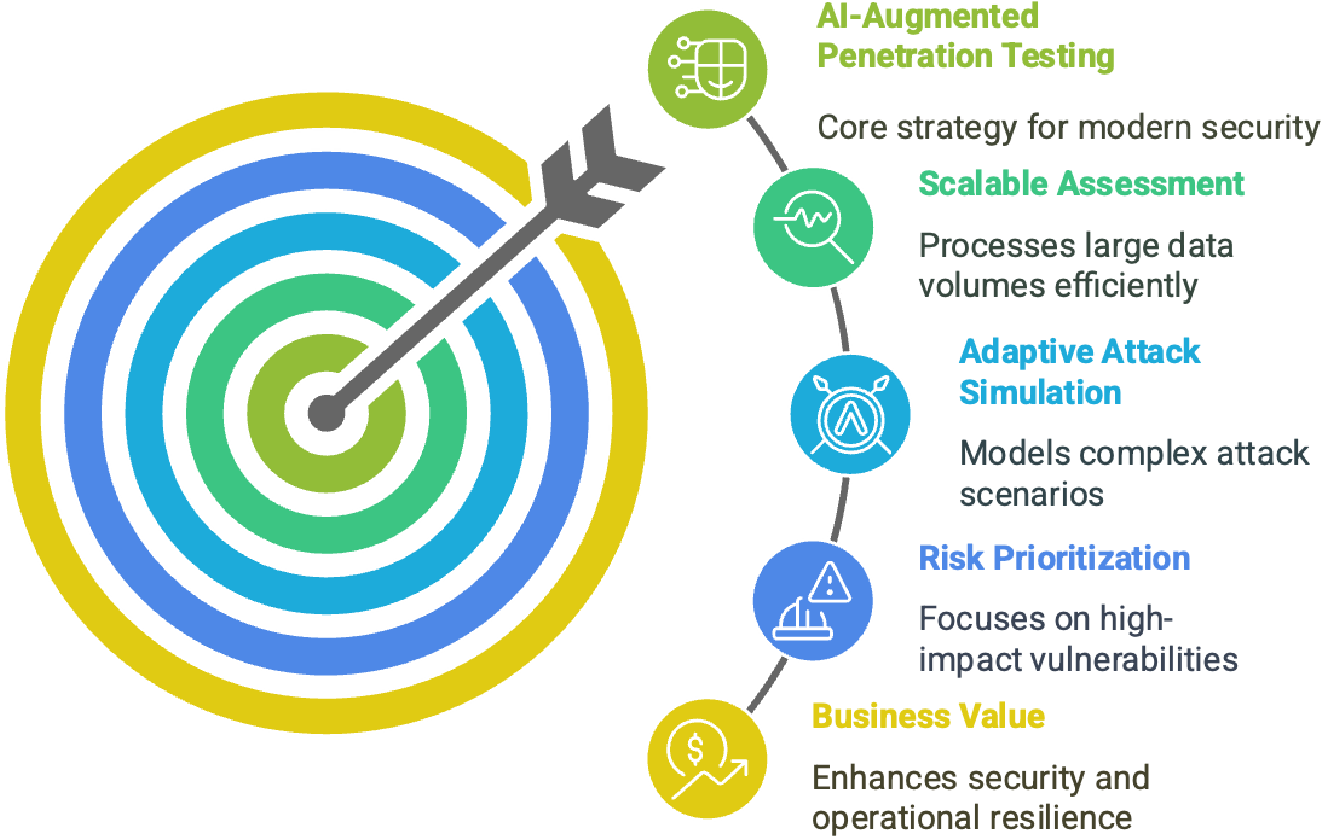
Figure Caption: The scope of AI-Augmented Penetration Testing for Offensive Security
Introduction
Organizations must continually refine their security practices as cyberattacks grow in frequency and technical sophistication. Traditional penetration testing, where skilled analysts probe networks, applications, and systems for known weaknesses, remains a core component of any proactive security program. Yet it depends heavily on manual effort, repeatable attack templates, and sequential workflows. In today’s environment, these methods can miss subtler or emerging vulnerabilities and struggle to keep pace with agile, automated threats.
Artificial intelligence (AI) is reshaping the cybersecurity landscape on two fronts [1], [2]. On defense, AI drives faster threat detection, anomaly analysis, and predictive modeling, helping teams identify unusual patterns in large volumes of log and network data [3]. On offense, malicious actors use AI to generate polymorphic malware, orchestrate adaptive phishing campaigns, and tailor exploits that evade signature‑based defenses [4], [5], [6]. This dual‑use reality highlights a critical blind spot: while defenders increasingly rely on AI, their testing practices often lag behind the speed and complexity of AI‑powered attacks.
AI‑augmented penetration testing addresses the limitations of traditional methods by integrating intelligent algorithms across the entire testing lifecycle, enhancing the proven value of human expertise [2], [7]. Rather than simply automating scanners or scripting predefined attack sequences, it applies machine learning (ML) and advanced analytics to streamline and strengthen key stages of testing. This includes discovering assets and attack surfaces more efficiently by correlating threat intelligence feeds, asset inventories, and external data sources; identifying unconventional vulnerabilities through anomaly detection and pattern recognition that highlight unexpected behaviors or misconfigurations [7]; simulating adaptive, multi-phase attacks using reinforcement learning agents that adjust tactics in real time [2], [8]; prioritizing findings based on data sensitivity, exploit complexity, and business impact rather than relying on static vulnerability counts [7]; and streamlining reporting through automated, actionable dashboards that support remediation efforts and continuously improve AI performance over time [7], [9].
The reason behind this shift is apparent: AI-powered threats evolve quickly and adapt in ways that traditional testing frameworks cannot emulate [2], [5]. By embedding AI into offensive security, organizations gain scale and speed, conducting deeper assessments to expedite and uncover chained or emerging vulnerabilities before attackers can exploit them [7]. The objective role of this is not to replace human testers, but to equip them to effectively handle vulnerabilities [1], [7]. Machine‑driven analysis handles repetitive, data‑intensive tasks, freeing skilled professionals to focus on creative exploit development, context‑aware risk analysis, and strategic planning.
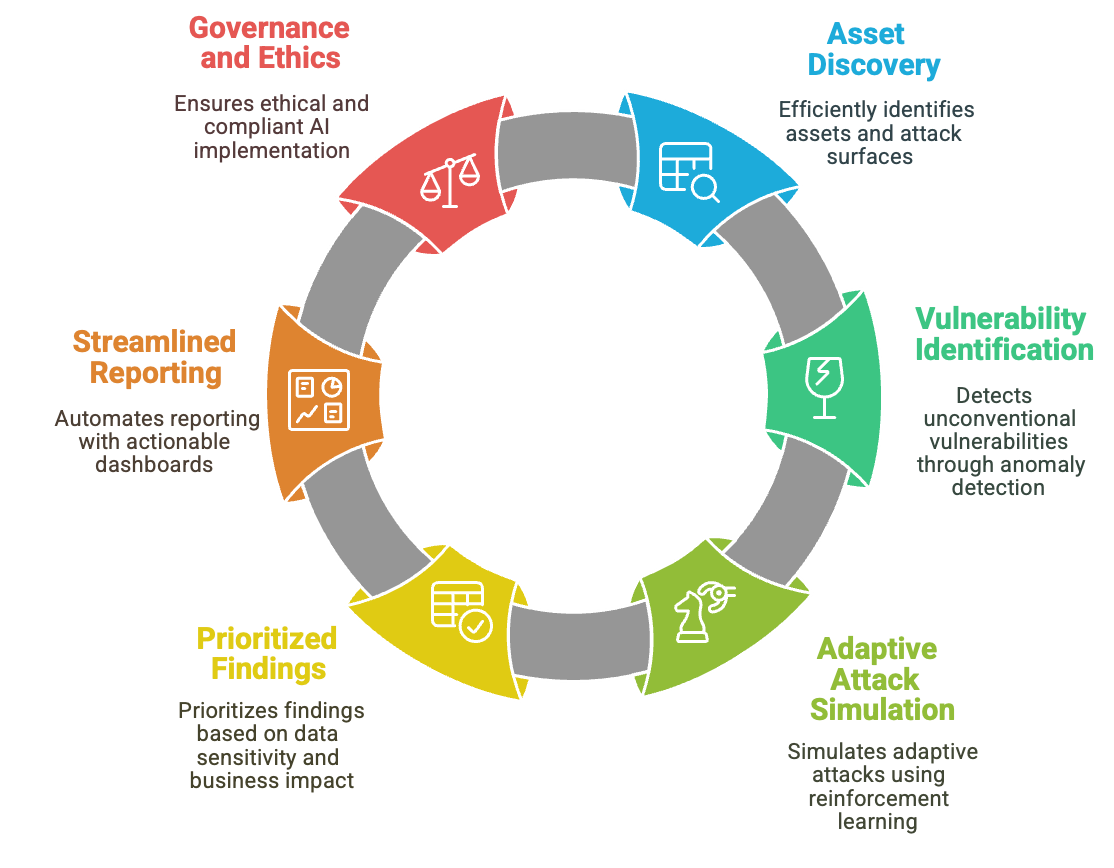
Figure Caption: Enhancing Cybersecurity with AI
Implementing AI‑augmented penetration testing introduces new considerations around governance, ethics, and data privacy [4], [10]. Teams must validate AI outputs, maintain transparent model documentation, and ensure compliance with relevant regulations. Clear oversight structures, from technical review boards to executive‑level governance, help strengthen accountability and trust. Equally important is investing in training and change management so analysts can interpret AI findings, fine‑tune algorithms, and integrate new workflows without disrupting core operations [1], [7].
This report offers a practical, in‑depth examination of AI‑augmented penetration testing. We begin by defining its core concepts and principles [1], [7], then explore its concrete benefits, including faster testing cycles, richer insights, and prioritized remediation [7]. Ethical considerations, data‑privacy safeguards, and the imperative of human‑machine collaboration are core principles that must be maintained [4], [10]. We also address the challenges and limitations inherent to AI‑driven offense, from potential biases to model accuracy [4], [11], [12], [13]. Next, we survey real‑world use cases of existing AI‑powered tools [8], [9], [14], [15], [16], [17], [18], present emerging trends [3], [5], and next‑generation capabilities.
By the end of this whitepaper, security leaders, stakeholders, and practitioners will have a clear framework for adopting AI‑augmented penetration testing, including understanding when and where to apply it, how to govern it responsibly [4], [10], and how to measure its impact. The strategic integration of AI into offensive security is a critical step to stay ahead of attackers, who already employ these technologies [5].
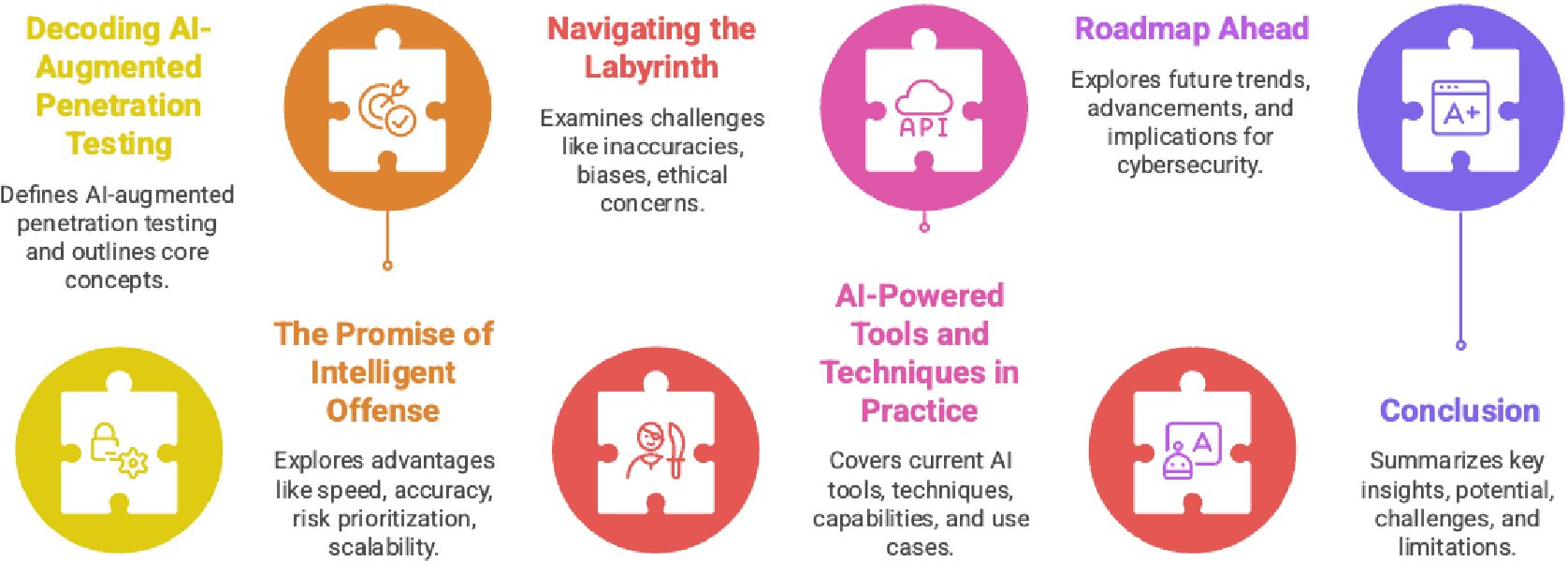
Figure Caption: An Overview of the Report Organization
The rest of this paper is organized as follows:
- Decoding AI-Augmented Penetration Testing: Defines AI-augmented penetration testing and outlines the core concepts and principles that support the emerging field.
- The Promise of Intelligent Offense: Explores the significant advantages that AI brings to penetration testing, such as increased speed and efficiency, improved accuracy, enhanced risk prioritization, and scalability
- Navigating the Labyrinth: Examines the inherent challenges and limitations of using AI in offensive security, including the potential for inaccuracies, the lack of contextual understanding, algorithmic biases, and ethical concerns.
- AI-Powered Tools and Techniques in Practice: Covers current AI tools and techniques used in penetration testing, highlighting their capabilities and use cases.
- Roadmap Ahead: Explores the potential future trajectory of AI in penetration testing, discussing emerging trends, potential advancements, and their implications for cybersecurity.
- Conclusion: Summarizes key insights from the report, highlighting the potential of AI-augmented penetration testing and the need to address its challenges and limitations.
Decoding AI-Augmented Penetration Testing
A clear understanding of AI-augmented penetration testing begins with how the field is defined in current research [2], [7]. At its core, this approach identifies security vulnerabilities in machine learning–driven systems and develops defenses against increasingly advanced, automated attacks [2]. Unlike traditional penetration testing, which targets conventional software, this discipline addresses the distinct risks introduced by AI, requiring both cybersecurity expertise and a working knowledge of data-driven models [7]. The process goes beyond detecting current weaknesses, aiming to anticipate future attack strategies as intelligent systems evolve. As these technologies become more embedded in business operations and critical infrastructure, the consequences of a security failure — including data breaches, service disruptions, and unauthorized access — grow more severe. The primary goal of penetration testing in this context is to uncover and address risks before they are exploited [2]. This approach also marks a shift in how security assessments are conducted, as artificial intelligence is not only a target but increasingly a tool for improving the testing process itself [2], [7]. Automated systems can accelerate vulnerability discovery, exploit development, and reporting, enhancing speed and consistency across AI and non-AI targets [7]. Offloading repetitive tasks allows human testers to focus on higher-level analysis and strategy, resulting in a more efficient and thorough assessment process [1], [7].
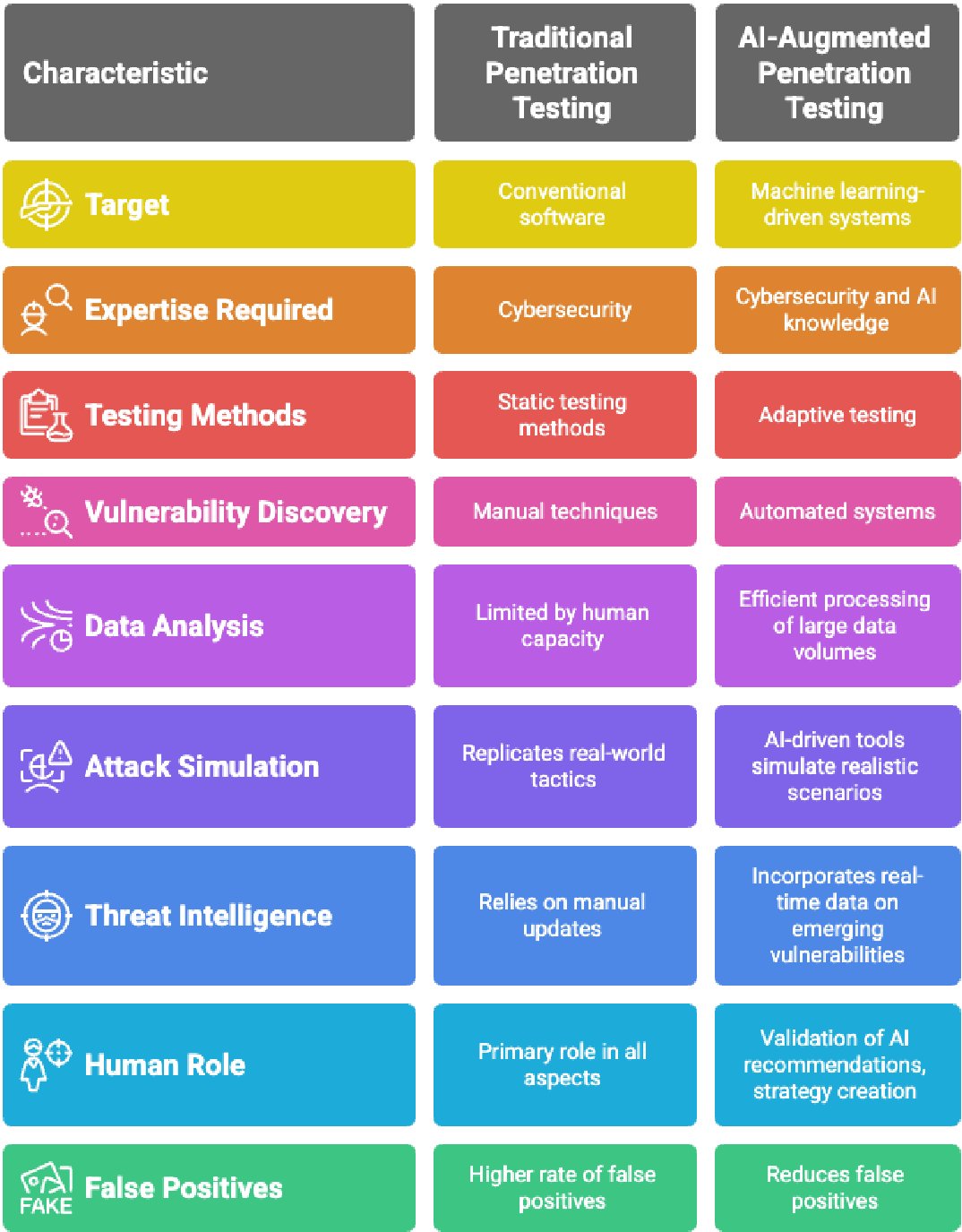
Figure Caption: Comparison of AI-Augmented Penetration with Traditional Approach
Testing the security of AI systems presents challenges that differ from traditional application security, as penetration testers must account for the complexity of ML models, the dynamic nature of their learning processes, and the specific ways these systems handle, process, and store data [7]. This work requires cybersecurity expertise and a solid understanding of AI architectures, algorithms, and potential failure modes [7]. Because AI models continuously adapt to new inputs, static testing methods designed for conventional software are often insufficient for uncovering vulnerabilities in these systems. In addition to being a target, AI enhances penetration testing by efficiently processing and analyzing large volumes of data [7]. AI can identify patterns, anomalies, and correlations that are difficult for human analysts to detect, especially within the limited timeframes typical of security assessments [2], [7]. This added depth allows penetration testers to reveal hidden vulnerabilities and attack paths that manual techniques might miss, offering a more thorough understanding of a system’s security posture.
AI-driven tools simulate realistic attack scenarios, replicating real-world tactics, techniques, and procedures, including those targeting AI systems, to help identify defensive gaps and refine mitigation strategies [2]. ML also supports adaptive testing, adjusting strategies based on previous test results and the real-time behavior of target environments, enhancing the detection of new or overlooked vulnerabilities [7]. Additionally, AI excels at processing external threat intelligence, enabling testers to incorporate real-time data on emerging vulnerabilities like prompt injection, data poisoning, and model inversion [2], [11], [12]. This ensures testing remains aligned with the latest threats. AI also provides context-aware feedback during testing, helping testers assess vulnerabilities concerning the specific system, prioritize risks, and focus remediation efforts [7]. Furthermore, AI reduces false positives by filtering out inaccurate or redundant reports, allowing security teams to concentrate on actual threats and improving testing reliability [7].
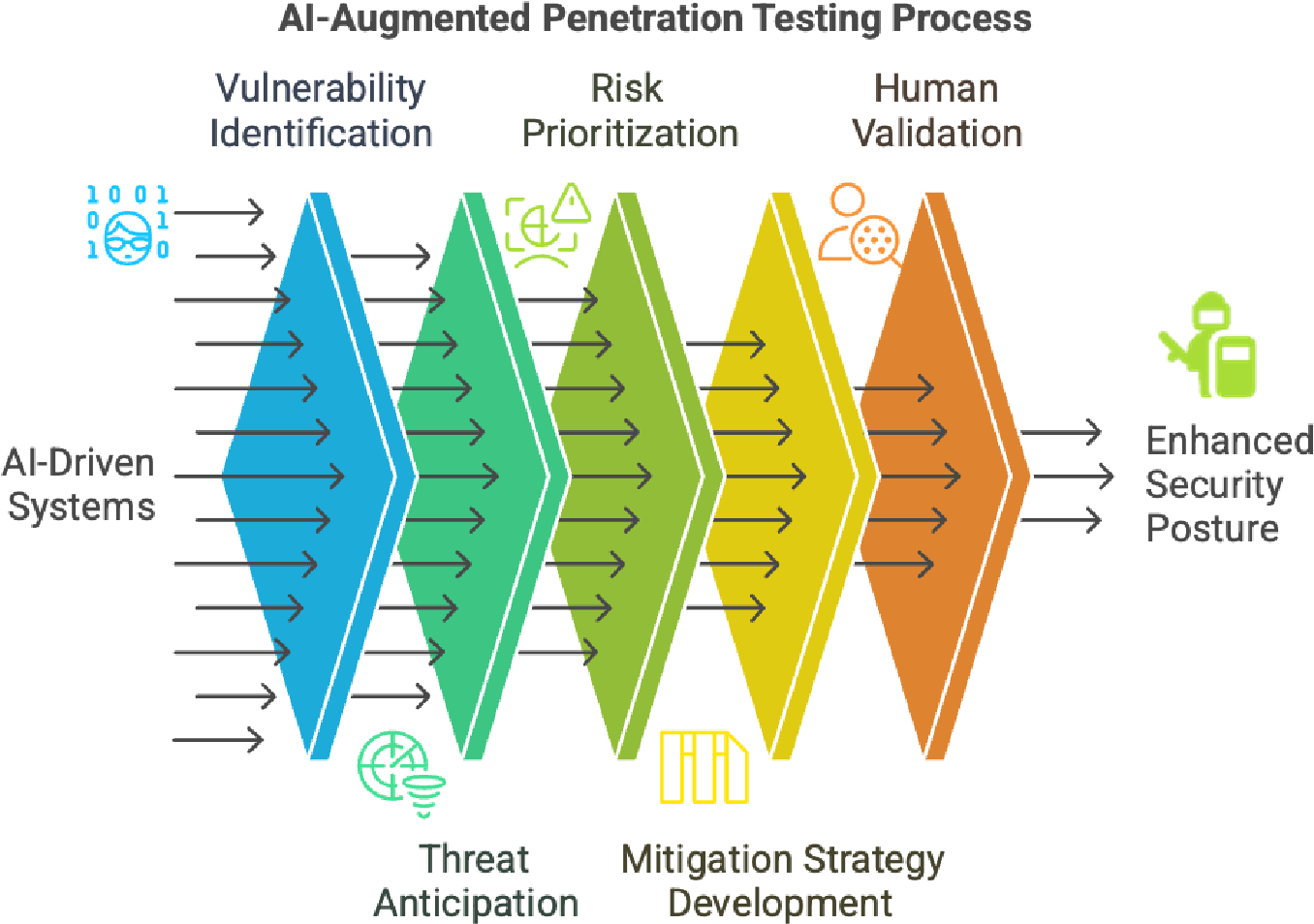
Figure Caption: AI-Augmented Penetration Testing Process
While AI enhances penetration testing, human expertise remains crucial [1], [7]. AI cannot fully grasp the context in which systems operate, and its recommendations still need validation by skilled professionals [7], [13], [13]. Human testers are vital for creating strategies, assessing risks, and responding to complex challenges [1]. AI-augmented penetration testing is still evolving, as the field matures alongside rapid advancements in cybersecurity and AI. The absence of a universally accepted definition reflects its early development [2]. However, a common theme is the hybrid model, combining AI’s automation, speed, and analytical power with human testers' critical thinking and strategic judgment [1], [7]. This approach enables organizations to tackle the evolving challenges of modern cybersecurity more effectively and flexibly.
The Promise of Intelligent Offense
AI offers great potential in penetration testing, significantly enhancing speed, efficiency, and accuracy in security assessments [7]. AI algorithms can process vast amounts of data at extraordinary speeds, allowing penetration testers to quickly identify vulnerabilities, thus reducing the time needed for comprehensive testing [7]. Automating repetitive tasks such as reconnaissance, vulnerability scanning, and initial analysis frees human testers to focus on more complex and strategic aspects of the assessment [1], [7]. By accelerating the early stages of testing, AI enables faster identification of vulnerabilities and quicker responses to security weaknesses, enhancing overall efficiency [7], [13], [13].
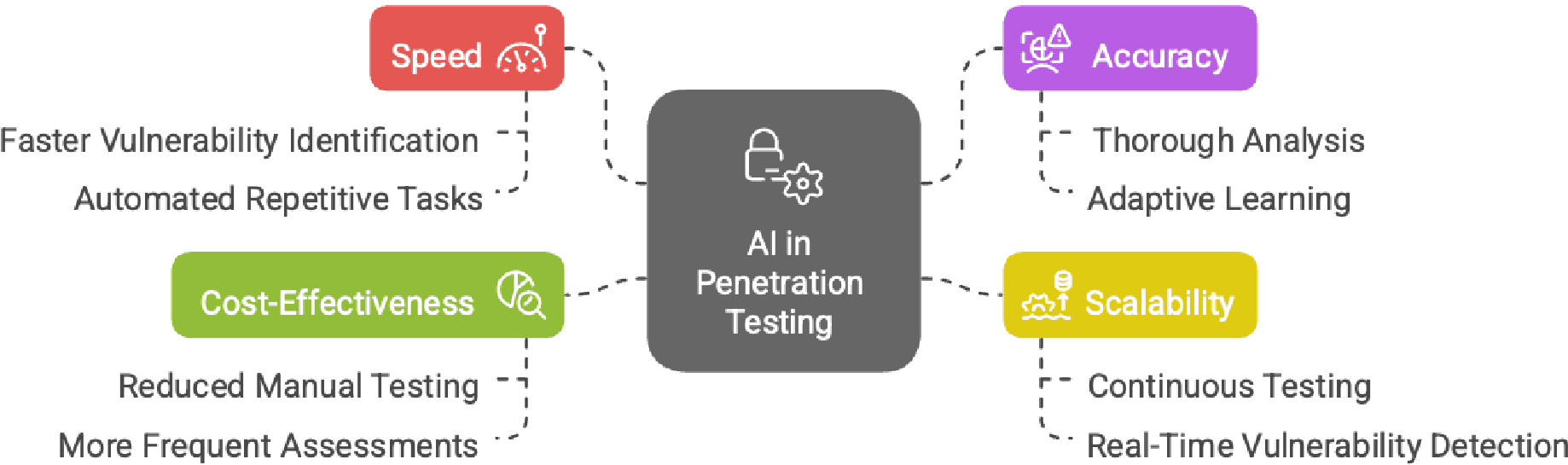
Figure Caption: AI in Penetration Testing: Benefits and Applications
In addition to enhancing speed, AI improves the accuracy and depth of vulnerability detection by providing a more thorough analysis than traditional methods, which may overlook complex vulnerabilities in systems and applications [7]. Through advanced algorithms, AI-powered tools excel at identifying elusive threats like zero-day vulnerabilities and advanced persistent threats (APTs), which require nuanced examination [7]. Many AI-driven tools feature adaptive learning, enabling continuous testing to identify emerging attack vectors in response to changing environments, discovering vulnerabilities that static models might miss [9]. Furthermore, AI strengthens risk prioritization by assessing vulnerabilities' potential impact and exploitability, using machine learning to prioritize risks based on their threat to an organization’s overall security posture [9]. This allows penetration testers to focus on the most critical weaknesses first, ensuring effective allocation of security resources. At the same time, AI tools can also predict the likelihood of a vulnerability being exploited, providing deeper insights for remediation [7].
Scalability is a key advantage AI brings to penetration testing, especially as organizations expand their IT environments with large networks and cloud infrastructures, which make testing more complex [7]. AI tools are designed to manage vast, interconnected systems, enabling continuous testing rather than periodic assessments, allowing for real-time vulnerability detection and faster remediation, thereby reducing attackers' opportunities [3], [9], [16]. Autonomous AI systems provide 24/7 active security assessments, ensuring constant vigilance and quick response to emerging threats [3], [16]. AI also enhances threat intelligence by analyzing diverse data sources to identify patterns and predict potential attack vectors, allowing it to create more realistic and adaptive attack simulations that reflect actual threat actors' tactics [5]. These simulations can replicate sophisticated attacks like adversarial attacks and data poisoning, which target AI systems, providing valuable insights into an organization’s defenses against AI-driven threats [11], [12]. Furthermore, AI strengthens adversary emulation exercises by replicating complex attack strategies, helping organizations better understand their resilience against real-world threats [9].
AI also helps reduce false positives, a common challenge in traditional penetration testing. By learning from past assessments, AI-powered tools improve their detection methods, ensuring only legitimate vulnerabilities are flagged, which reduces alert fatigue and allows security teams to focus on critical issues rather than non-relevant findings [7], [9]. Additionally, AI generates structured, detailed, and actionable reports, offering tailored insights and recommendations specific to an organization's security infrastructure.. Although the initial investment in AI-powered tools and the expertise required to implement them can be substantial, the long-term cost savings are significant. AI automates many labor-intensive tasks, reducing the reliance on manual testing and making it possible to conduct more frequent assessments within the same budget. This increased efficiency, with improved accuracy, scalability, and cost-effectiveness, makes AI a valuable addition to any organization's cybersecurity strategy, delivering long-term value by saving time and resources while enhancing overall security defenses.
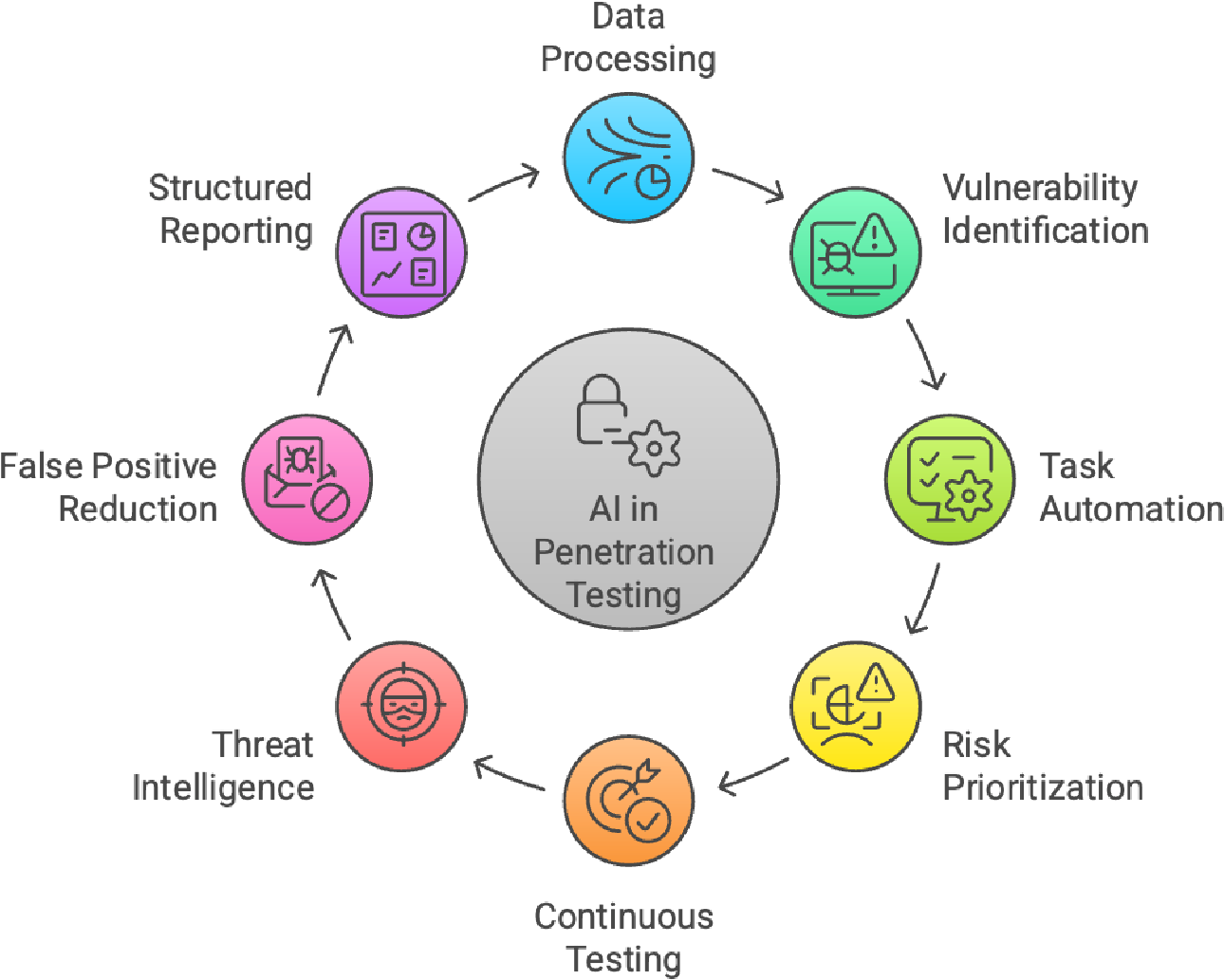
Figure Caption: AI-Driven Penetration Testing Cycle
Finally, AI offers substantial benefits in penetration testing, including faster testing, improved detection accuracy, more thoughtful risk prioritization, and scalable solutions for complex environments [7]. It enhances threat intelligence, simulates advanced attack techniques, and reduces false positives, contributing to more effective and efficient security assessments. While the initial investment can be high, the potential cost savings and improved security posture make AI-powered penetration testing an essential tool for organizations aiming to stay ahead of evolving cyber threats.** **
Despite its transformative potential, integrating AI into offensive security brings several critical challenges and limitations that organizations must address before widespread adoption [4], [10]. A fundamental concern is the reliability of AI-driven tools, which can produce inaccurate or even fabricated results. Language models with memory and search (LLMs), increasingly deployed in AI-augmented testing, are prone to “hallucinations”, generating plausible-sounding but incorrect information [13]. More generally, automated tools may yield false positives, in which benign behaviors are flagged as vulnerabilities, and false negatives, where genuine security flaws go undetected. False positives waste precious time and resources as security teams chase phantom issues. In contrast, false negatives leave critical weaknesses unaddressed, undermining trust in the testing process and potentially exposing organizations to undetected threats [13].
Navigating the Labyrinth:
Another significant limitation is AI’s lack of nuanced contextual understanding [13], [15]. While ML models excel at pattern recognition and data processing, they struggle to grasp the complex business logic and operational context that form the backbone of many real-world applications. AI tools may identify syntactic or low-level issues in code or network traffic but fail to recognize vulnerabilities stemming from flawed workflows, misconfigurations, or unique proprietary systems. As a result, human penetration testers remain vital for interpreting AI-generated findings, validating their relevance, and conducting deep-dive analyses in complex or novel scenarios. Expert testers apply creative problem-solving and strategic judgment, abilities that AI, in its current state, cannot replicate to prioritize remediation and tailor solutions to an organization’s specific environment [15].
Algorithmic bias presents another challenge as AI models trained on skewed or incomplete datasets can distort testing results, leading to overlooked vulnerabilities or excessive false alarms [4], [12]. For example, underrepresented technologies in training data might cause AI tools to miss critical issues, while familiar patterns could trigger unnecessary alerts. In LLM-based tools, this bias might favor certain vulnerability classes or discriminate against specific platforms or architectures [13], [15]. Addressing these risks requires well-curated data, regular model audits, and diverse, up-to-date threat intelligence to ensure fair and comprehensive coverage [4].
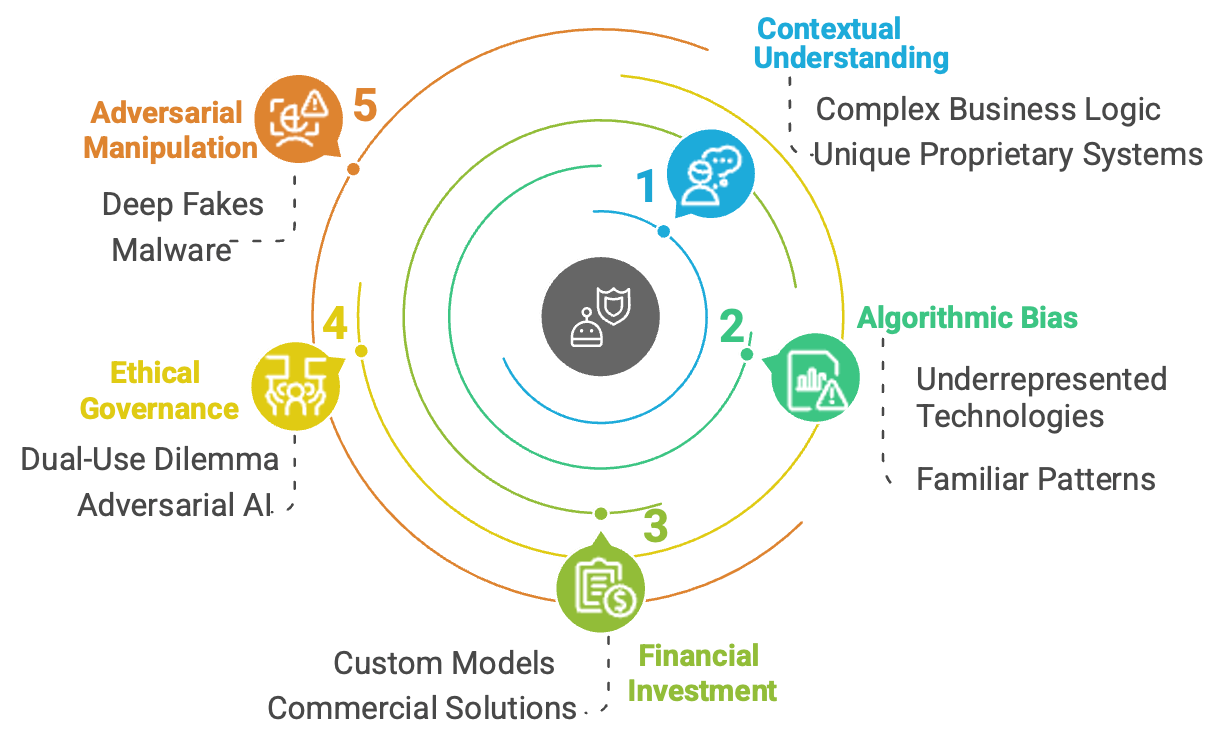
Figure Caption: Challenges and Limitations of AI in Offensive Security
Developing, acquiring, and deploying AI-powered penetration testing tools requires significant financial and organizational investment. Custom models demand expert engineering and time, while commercial solutions can be expensive, and open-source tools require skilled in-house teams for setup and tuning. These costs often put advanced AI tools out of reach for smaller organizations, leaving them dependent on manual testing. Moreover, using AI tools effectively demands specialists with expertise in cybersecurity and artificial intelligence, a skill set that is often scarce, adding another layer of complexity to adoption and implementation.
Ethical and governance challenges are central to the adoption of AI in offensive security, as the same technologies designed to strengthen defenses can just as easily be repurposed for malicious use [10]. Autonomous AI systems capable of probing networks and identifying vulnerabilities risk falling into the wrong hands, enabling cybercriminals to launch highly automated and adaptive attacks [5], [16]. Adversaries are already using AI to craft convincing deepfakes, create malware that can evade detection, and manipulate the training data of defensive models through poisoning or adversarial inputs [6], [11], [12]. This dual-use dilemma blurs the line between ethical hacking and cybercrime, highlighting the need for clear policy guidelines, strong ethical frameworks, and strict access controls to prevent misuse [10]. At the same time, the evolving nature of adversarial AI requires constant monitoring, regular retraining, and the deployment of defensive strategies capable of countering AI-driven attack techniques [6], [11]. Without continuous human oversight and rigorous safeguards, AI-powered security tools risk becoming liabilities rather than assets in the ongoing arms race against increasingly sophisticated attackers [10].
Given these challenges, AI in offensive security is best understood as an augmentation tool rather than a replacement for human expertise. The risks of inaccurate outputs [13], contextual blind spots, algorithmic bias [11], [12], high costs, ethical dilemmas [4], [10], and adversarial manipulation [11], [12] all underscore the irreplaceable value of skilled human testers. Professionals bring the critical thinking, creativity, and domain knowledge needed to validate AI findings, assess their real-world significance, and craft effective remediation strategies. While AI excels at automating repetitive tasks, analyzing large data sets, and flagging potential issues at scale, it lacks the nuanced understanding and adaptive reasoning required to navigate complex and evolving security environments [13], [15]. Ultimately, a hybrid model that blends AI’s computational power with human insight offers the most resilient and responsible approach to penetration testing [10]. Organizations looking to adopt AI must confront its limitations head-on through thoughtful tool selection, ethical governance [4], and continuous human oversight, ensuring that these powerful technologies strengthen, not compromise, their security posture in an increasingly dynamic threat landscape.
AI-Powered Tools and Techniques in Practice
The field of AI‑augmented penetration testing has rapidly expanded to include a rich ecosystem of specialized tools that automate and enhance nearly every security assessment phase. Among open‑source offerings, Nebula is an AI‑driven assistant that translates natural‑language commands into actions for established hacking frameworks, automating reconnaissance, note‑taking, and vulnerability analysis [1]. DeepExploit uses reinforcement learning to master the exploitation phase, iteratively improving its attack strategies against identified weaknesses [8]. PentestGPT, built on GPT-4, guides testers through complex scenarios and can even solve intermediate security puzzles, demonstrating the reasoning power of large language models [15]. Meanwhile, the NSA’s Autonomous Penetration Testing (APT) platform, launched in 2024, shows the growing strategic importance of AI in cyber defense by offering organizations a way to continuously and autonomously probe their networks [16].
Commercial platforms are similarly advancing the state of the art. Astra Pentest provides ongoing vulnerability scanning that mimics real‑world attacker behavior across diverse environments [9], [17]. At the same time, Workik AI integrates with tools like Metasploit and Burp Suite to streamline security audits, threat analysis, and risk mitigation. PlexTrac focuses on reporting and threat‑exposure management, turning raw test data into structured insights that help teams prioritize remediations. Skanda from CISO Global combines AI and machine learning for on‑demand security assessments, and FireCompass leverages an “agentic AI” model to perform continuous red‑teaming and attack‑surface management. AI‑exploits (from Protect AI) offers a curated repository of real‑world attacks against AI frameworks, educating testers on vulnerabilities unique to machine‑learning infrastructures.
In addition, a growing roster of tools applies AI to niche offensive‑security tasks. HackerGPT (WhiteHack Labs) uses a blend of ReAct and retrieval‑augmented generation to identify and exploit application flaws autonomously. IBM Watson for Cybersecurity harnesses NLP to sift through vast threat‑intelligence feeds, aiding detection and prevention. PassGAN uses GANs to generate realistic password lists, outperforming brute‑force and dictionary attacks in many scenarios [18]. Other noteworthy solutions include SentinelAI, PhishBrain, CipherCore, DarkTrace Antigena, VulnGPT, ZeroDay Sentinel, HackRay, and Cortex XDR for activities ranging from social‑engineering simulations [6], [19] to cryptographic analysis. Tools like ImmuniWeb AI Pentest, Pentera, Cybereason AI Hunting Engine, Recon‑NG, Burp Suite AI Edition, Maltego AI, and XploitGPT further illustrate the breadth of AI’s integration, covering vulnerability hunting, adversary emulation, reconnaissance, and code analysis.
Underpinning these tools is a suite of machine‑learning techniques tailored to offensive security. Supervised and unsupervised learning models analyze historical and real‑time data, flagging anomalous network traffic, system behavior, and code patterns that might indicate vulnerabilities [7]. NLP enables AI to process and summarize large volumes of text‑based inputs—security logs, threat reports, and source code comments—and even draft human‑readable findings [15]. Deep learning architectures extend these capabilities, detecting sophisticated, previously unseen threats by modeling complex relationships within multidimensional datasets and, in some cases, automating exploit generation against identified weaknesses [8], [18].
Generative Adversarial Networks (GANs) have opened new frontiers in password‑guessing and payload generation. Beyond PassGAN’s password lists [18], GANs can synthesize evasive malware variants and phishing content that better mimic legitimate traffic, challenging conventional signature‑based defenses. As DeepExploit and SentinelAI demonstrate, reinforcement learning frames penetration testing as a dynamic game: tools learn optimal attack paths through reward‑based feedback, adapting to defensive countermeasures in real time [8]. Adversarial machine learning further stresses AI models themselves by crafting inputs designed to mislead or corrupt them, exposing blind spots in semantic understanding and model robustness [11], [12].
Fuzzing, a long‑standing technique of feeding malformed or random data to software, has also been revolutionized by AI [5], [20]. Instead of purely random inputs, intelligent fuzzers use learned models to target code paths most likely to harbor vulnerabilities, dramatically improving efficiency [20]. Looking ahead, autonomous AI agents powered by LLMs promise to orchestrate entire testing campaigns: they will plan tasks, invoke diverse tools, parse results, and interact with their environments to discover and exploit weaknesses—all with minimal human intervention [5], [20].
This rapidly evolving landscape of AI‑powered tools, ranging from community‑driven open‑source projects [1] to enterprise‑grade commercial platforms [9], [17], highlights both the ingenuity of the security community and the urgency of emerging threats. As these solutions mature, organizations must carefully evaluate which tools align with their risk profiles, integration requirements, and resource constraints. By pairing these automated capabilities with skilled human oversight, validating findings, guiding strategic decisions, and contextualizing results, security teams can harness AI’s full potential to deliver continuous, comprehensive, and adaptive penetration testing in an era of ever-increasing complexity.
Roadmap Ahead
The field of AI‑augmented penetration testing is set to evolve rapidly as both AI capabilities and cyber threats advance in complexity[3], [5]. One of the most striking developments will be the rise of truly autonomous testing platforms [3], [16]. Rather than relying on scripted playbooks or human‑driven orchestration, next‑generation tools will leverage sophisticated decision‑making algorithms to plan, execute, and validate comprehensive security assessments with minimal human oversight. These platforms will continuously adapt their strategies, probing for novel weak points, validating exploits in real time, and dynamically refining their approach based on measured outcomes [3]. By shouldering the bulk of repetitive tasks and initial exploit validation, autonomous systems will free security teams to focus on strategic planning and remediation, while enabling organizations to run frequent, large‑scale assessments across diverse environments [16].
A second key trend will be the tighter integration of AI with complementary technologies, most notably blockchain, cloud, and IoT [16]. In decentralized systems, for example, AI can monitor immutable ledgers for anomalous transaction patterns or smart‑contract vulnerabilities, automatically flagging inconsistencies that human auditors might miss. Within cloud environments, AI agents will sift through vast telemetry streams, correlating network flows, configuration drift, and access logs to uncover stealthy attack paths. And as IoT deployments balloon, machine‑learning models will become essential for parsing the torrent of device‑generated data, identifying compromised endpoints or firmware flaws long before they can be weaponized. By marrying AI’s analytical throughput with the unique properties of each platform, security teams will gain deeper, more context‑rich insights into their evolving threat surface.
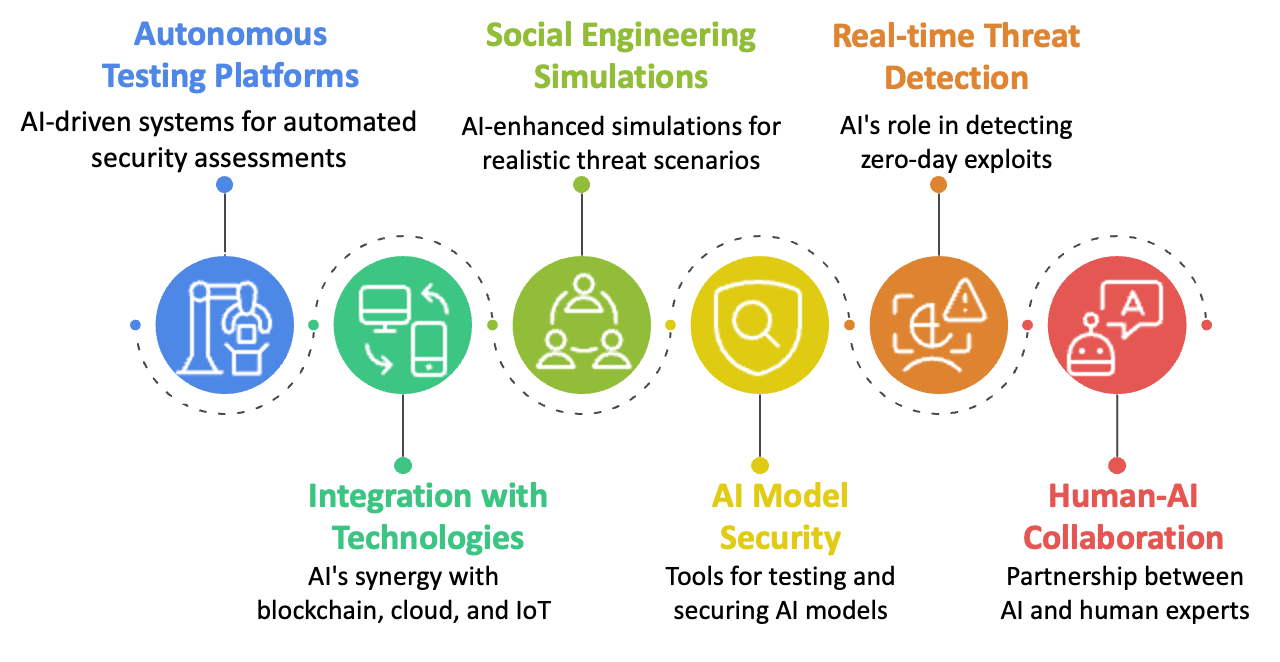
Figure Caption: Road Map of AI-Augmented Penetration Testing
Social engineering simulations will also see a step change in authenticity and efficacy [6], [19]. Today’s tools can craft generic phishing templates. Still, tomorrow’s AI engines will analyze individual behaviors, preferences, and communication histories to generate highly tailored attack vectors. This includes everything from spoofed email exchanges mimicking a colleague’s writing style to convincing voice‑synthesized vishing calls [6]. These simulations will stress-test technical controls and probe organizational culture and human decision‑making. By delivering hyper‑personalized scenarios, AI will expose subtle gaps in user awareness programs and help drive targeted training interventions that significantly reduce an organization’s “human attack surface”.
As AI grows more prolific in every facet of IT, there is an equally urgent need to subject AI models to rigorous security scrutiny [2], [11], [12]. Future AI‑centric testing tools will specialize in probing machine‑learning pipelines for prompt‑injection flaws, data‑poisoning vectors, model‑inversion risks, and backdoor insertion attacks. Advanced algorithms will emulate adversarial tactics, subtly perturbing inputs to measure a model’s robustness, or reverse-engineering gradients to reveal sensitive training data. By treating AI systems as first‑class targets, rather than opaque black boxes, security engineers can harden these models against the threats they were once powerless to detect.
Finally, the real‑time detection of zero‑day exploits and the deepening collaboration between AI and human experts will define the field’s maturation [3]. AI’s ability to ingest and correlate massive volumes of telemetry means it can spot the earliest deviations from baseline behavior, potentially flagging an unknown exploit within minutes of its first deployment. Yet, the full promise of AI will only be realized through a hybrid model: machine‑driven analysis accelerating initial triage, followed by human investigation to interpret high‑risk anomalies and craft resilient remediation plans [10]. Seamless interfaces—AI assistants that annotate findings, suggest hypotheses, and guide manual testing—will blur the lines between automated and expert‑led workflows [1]. In this symbiosis, organizations will gain both the scale afforded by AI and the strategic insight provided by seasoned professionals, ensuring that as threats become more sophisticated, defenses grow even more agile.
Conclusion
AI‑augmented penetration testing marks a pivotal shift in cybersecurity by combining the raw computational power of ML with the strategic insight of experienced testers. These tools automate repetitive tasks, scanning, data analysis, and report generation, while uncovering complex vulnerabilities and simulating sophisticated attack scenarios at a speed and scale that manual methods cannot match. By continuously processing vast telemetry streams, intelligently prioritizing risks, and adapting their strategies in real time, AI‑driven platforms enable organizations to conduct more frequent and comprehensive assessments. The result is a sharper, more proactive security posture: critical weaknesses are identified and remediated before adversaries can exploit them, and human testers can focus their creativity and expertise on the highest‑value tasks.
At the same time, integrating AI into offensive security introduces new considerations. Automated tools can produce false positives and negatives, misinterpret nuanced business logic, and perpetuate biases inherited from their training data. Ethical and governance issues, ranging from dual-use risk to adversarial manipulation, demand clear policies and rigorous oversight. Moreover, developing, deploying, and maintaining sophisticated AI systems requires significant investment and speciali zed skills, underscoring the importance of human‑machine collaboration rather than wholesale automation.
Looking ahead, the future of AI‑augmented penetration testing lies in truly autonomous platforms that dynamically adapt their approaches, the fusion of AI with emerging technologies like IoT and blockchain, and the advancement of self‑testing frameworks that probe AI models for data‑poisoning, prompt‑injection, and other AI‑specific attacks. Most importantly, a hybrid model, where AI accelerates routine discovery and humans exercise judgment, context, and ethical consideration, will remain the gold standard. By embracing AI’s capabilities while acknowledging its limits, security teams can build a resilient, adaptive defense strategy that stays one step ahead of ever‑evolving cyber threats.
Bibliography
- “AI-Powered Penetration Testing: Nebula in Focus and How It Stacks Up Against the Rest,” Beryllium. Accessed: Apr. 23, 2025. [Online]. Available:
https://www.berylliumsec.com/blog/ai-powered-penetration-testing
- “AI Penetration Testing: Navigating the New Frontier.” Accessed: Apr. 23, 2025. [Online]. Available: https://www.cybernx.com/ai-penetration-testing-navigating-the-new-frontier/ [3] C. R. Team, “The Future of AI Data Security: Trends to Watch in 2025,” CyberProof.
Accessed: Apr. 23, 2025. [Online]. Available: https://www.cyberproof.com/blog/the-future-of-ai-data-security-trends-to-watch-in-2025/
- “Ethical Challenges in AI- Safeguard Privacy & Managing Offensive Security,” RSA Conference. Accessed: Apr. 23, 2025. [Online]. Available:
http://www.rsaconference.com/library/blog/ethical-challenges-in-ai-safeguard-privacy-mana ging-offensive-security
-
F. Cyber, “How will AI change Cyber Operations | Fusion Cyber News.” Accessed: Apr. 23,
-
[Online]. Available: https://www.fusioncyber.co/news-feed/ai-impact-cyber-operations
-
K. Labs, “How Hackers Use Agentic AI for Social Engineering & Phishing - Keepnet,” Keepnet Labs. Accessed: Apr. 23, 2025. [Online]. Available: https://keepnetlabs.com/blog/how-hackers-use-agentic-ai-to-advance-social-engineering [7] “Introducing AI Penetration Testing | @Bugcrowd.” Accessed: Apr. 23, 2025. [Online]. Available: https://www.bugcrowd.com/blog/introducing-ai-penetration-testing/
-
A. AlMajali, L. Al-Abed, K. M. Ahmad Yousef, B. J. Mohd, Z. Samamah, and A. Abu Shhadeh, “Automated Vulnerability Exploitation Using Deep Reinforcement Learning,” Appl. Sci., vol. 14, no. 20, Art. no. 20, Jan. 2024, doi: 10.3390/app14209331.
-
“Unbiased Astra Pentest Review: Features, Pricing & Flaws.” Accessed: Apr. 23, 2025.
[Online]. Available: https://www.uprootsecurity.com/blog/astra-pentest-review
- C. Owen-Jackson, “Navigating the ethics of AI in cybersecurity | IBM.” Accessed: Apr. 23, 2025. [Online]. Available: https://www.ibm.com/think/insights/navigating-ethics-ai-cybersecurity
- T. Thomas, A. P. Vijayaraghavan, and S. Emmanuel, “Adversarial Machine Learning in
Cybersecurity,” in Machine Learning Approaches in Cyber Security Analytics, T. Thomas, A. P. Vijayaraghavan, and S. Emmanuel, Eds., Singapore: Springer, 2020, pp. 185–200. doi: 10.1007/978-981-15-1706-8_10.
- I. Rosenberg, A. Shabtai, Y. Elovici, and L. Rokach, “Adversarial Machine Learning Attacks and Defense Methods in the Cyber Security Domain,” ACM Comput. Surv., vol. 54, no. 5, pp. 1–36, Jun. 2022, doi: 10.1145/3453158.
- G. Jennifer, “AI hallucinations can pose a risk to your cybersecurity | IBM.” Accessed: Apr.
23, 2025. [Online]. Available: https://www.ibm.com/think/insights/ai-hallucinations-pose-risk-cybersecurity
- berylliumsec/nebula. (Apr. 24, 2025). Python. berylliumsec. Accessed: Apr. 23, 2025.
[Online]. Available: https://github.com/berylliumsec/nebula
- A. L. Martínez, A. Cano, and A. Ruiz-Martínez, “Generative Artificial Intelligence-Supported Pentesting: A Comparison between Claude Opus, GPT-4, and Copilot,” Jan. 12, 2025, arXiv: arXiv:2501.06963. doi: 10.48550/arXiv.2501.06963.
- “NSA CAPT Program for DIB Suppliers,” Horizon3.ai. Accessed: Apr. 23, 2025. [Online]. Available: https://horizon3.ai/nsa-capt-program-for-dib-suppliers/
- “Astra Security Raises Funding to Simplify Cybersecurity With AI-Driven Pentesting.” Accessed: Apr. 23, 2025. [Online]. Available:
https://www.businesswire.com/news/home/20250205502953/en/Astra-Security-Raises-Fun ding-to-Simplify-Cybersecurity-With-AI-Driven-Pentesting
- B. Hitaj, P. Gasti, G. Ateniese, and F. Perez-Cruz, “PassGAN: A Deep Learning Approach for Password Guessing,” Feb. 14, 2019, arXiv: arXiv:1709.00440. doi:
10.48550/arXiv.1709.00440.
- Arsen, “Arsen Introduces AI-Powered Phishing Tests to Improve Social Engineering Resilience,” GlobeNewswire News Room. Accessed: Apr. 23, 2025. [Online]. Available: https://www.globenewswire.com/news-release/2025/03/24/3047714/0/en/Arsen-Introduces
-AI-Powered-Phishing-Tests-to-Improve-Social-Engineering-Resilience.html
- “What Is Fuzz Testing and How Does It Work? | Black Duck.” Accessed: Apr. 23, 2025.
[Online]. Available: https://www.blackduck.com/glossary/what-is-fuzz-testing.html
About the Author
Lakshmi Medasani
I am a Senior QA Engineer specializing in software testing and quality assurance for e-commerce platforms. I have hands-on experience in both automation and manual testing, utilizing tools such as Selenium WebDriver, TestNG, Core Java, BDD, and JIRA. I have successfully led functional, regression, and integration testing initiatives, and I thrive in agile environments, collaborating cross-functionally to uphold product quality. In addition to testing, I manage CI/CD pipelines using Jenkins and focus on delivering solutions. Recently, I authored a whitepaper titled “AI-Augmented Penetration Testing: The Future of Offensive Security”, which explores how artificial intelligence is transforming cybersecurity testing practices.
View Lakshmi Medasani's profileNeed more information?
Our team of experts can provide custom guidance on implementing the strategies outlined in this whitepaper for your organization.